
How to Evaluate an LED Strip Supplier for OEM Wall Lighting Programs
An OEM wall lighting program is far more likely to fail at the supplier stage than at the installation stage. The strip that arrives in month one matches the approved sample. The strip that arrives in month eight quietly does not — a different LED bin, a thinner PCB, a lower density, a colour temperature that has drifted. For a wholesaler building a private-label wall lighting line, the evaluation you run before the first purchase order is the cheapest quality control you will ever buy.
This guide is written for wholesalers, importers and brand owners entering OEM/ODM wall lighting — acoustic and slat wall systems, hotel corridors, feature walls and premium residential interiors. It explains exactly what to verify, in what order to verify it, and which specification values carry real weight: 24V low-voltage architecture, SMD LED and copper PCB assembly, double-layer PCB layouts, LED density per metre, and colour rendering at Ra≥80 or above.
The short answer: evaluate an LED strip supplier for OEM wall lighting programs against seven points — low-voltage system architecture, PCB and LED assembly method, PCB layering and voltage-drop behaviour, LED density per metre, colour rendering, compliance documentation, and production capacity with a defined test protocol. Verify the first five on a physical sample before you ever discuss unit price.
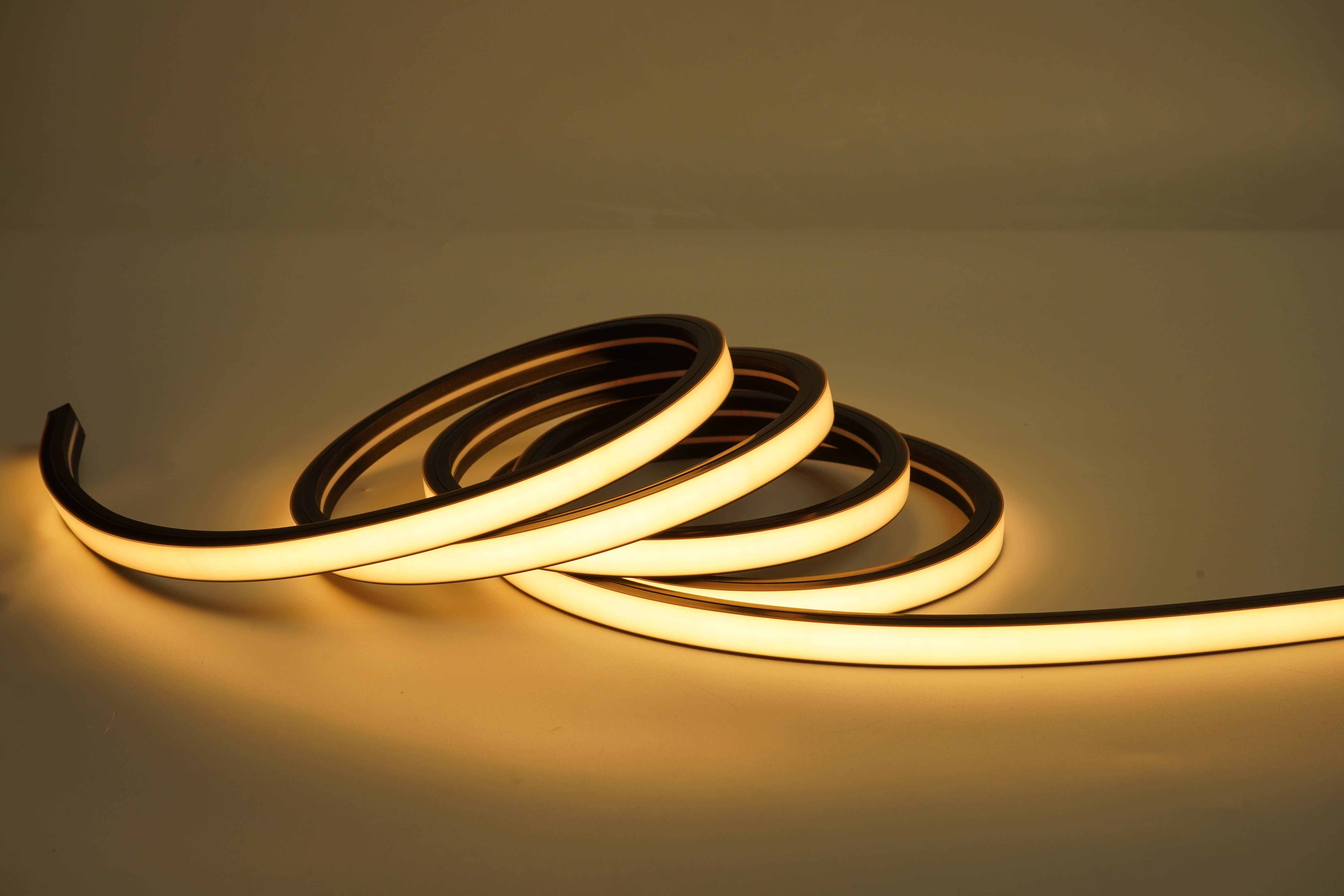 Acoustic wall LED strip light built for slat and acoustic panel wall programs — 24V, 8mm PCB, 180 LEDs per metre.
What Makes OEM Wall Lighting Different From Standard Strip Sourcing
Standard LED strip sourcing is a transaction: buy a reel, test the reel, use the reel. OEM wall lighting is a product commitment. The strip becomes part of a wall system that carries your brand name, your packaging, your label and your warranty — and it has to be reproducible across repeat orders, not just correct once.
Three structural differences drive the evaluation checklist:
- Architectural fit, not just electrical fit. Wall strips are often installed into narrow profiles — recessed slat wall panels, panel gaps, cove returns. A strip designed for 13mm/15mm slat wall panel fitting cannot be substituted with a generic reel of a different width or surface finish, even if both are 24V.
- Visually exposed performance. Wall lighting is the layer that customers touch, photograph and inspect. Uneven density, a visible dot pattern, or a colour temperature that shifts between two batches of the same order is immediately visible on a finished wall.
- Private label transfers liability. Under an OEM arrangement, the specification, the label and the compliance claim carry your brand. If the supplier substitutes components between the sample and the production run, the failure lands on you.
The consequence is that supplier evaluation for wall lighting programs must test repeatability, not just sample quality. A supplier that cannot document its PCB construction, its LED binning policy and its test protocol cannot protect your program, regardless of the sample it sends you.
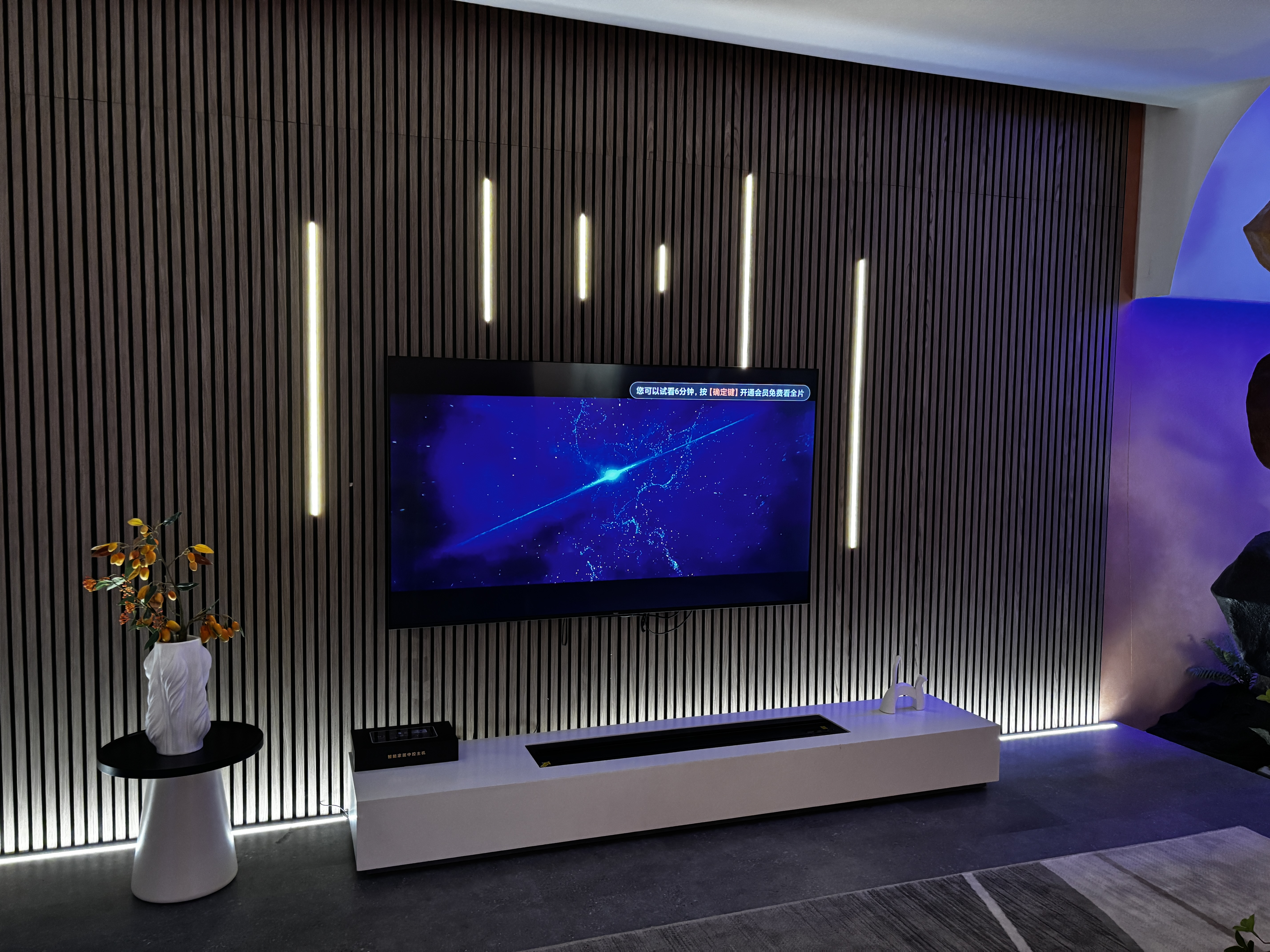 Wall lighting strips are dimensioned around the panel gap, not around a standard reel length — width, surface finish and cut pitch all matter.
The Market Context Behind Wall Lighting Sourcing Decisions
Wall lighting sits inside a category that is expanding quickly, and the specification expectations are rising with it. The relevant third-party figures:
- The global LED strip market was valued at approximately USD 5.8 billion in 2025 and is projected to reach USD 13.2 billion by 2034, a CAGR of 9.6% (Dataintelo).
- Flexible LED strips represent the largest product type, holding a 67.4% share as of 2025 (Dataintelo).
- Commercial applications contribute roughly 33.8% of global LED strip revenues (Dataintelo, 2024) — wall lighting in hospitality, retail and office interiors is a core part of that share.
- Over 65% of new architectural lighting installations in 2025 use LED strip technology (Business Research Insights).
- The 24V segment accounted for 52.0% of linear LED strip fixture market revenue in 2022 (Grand View Research), which is why 24V is the practical baseline for wall program specification sheets.
- High-density strip variants above 120 LEDs/m account for nearly 19% of premium installations (Business Research Insights, 2025).
- The 3000K–4000K colour temperature band held a 33.2% revenue share of the linear LED strip fixture market (Grand View Research).
- Europe is the fastest-growing regional market for linear LED strips at a CAGR of 12.6% (Grand View Research).
- China accounts for approximately 59.3% of global light fixture exports in 2024 (OEC). The United States was the top destination for China's LED lighting exports at USD 10.86 billion, with Germany second at USD 2.097 billion (Tuda Technology / China Lighting Association).
Regulatory pressure is moving in the same direction. Energy efficiency requirements in the EU under the Ecodesign framework are driving a 55% shift toward LED-based systems (European Commission), and ErP energy-efficiency standards sit within the wider Green Deal objective. In the United States, low-voltage LED strips (12V/24V) are classified under the safety standard UL 2108 (UL Standards & Engagement), while IEC 60598-2-20:2022 specifies safety requirements for lighting chains including LED strips (International Electrotechnical Commission).
Practically, this means your wall lighting strip has to satisfy two audiences at once: the architect or installer who cares about light quality, and the market-access authority that cares about documentation. A supplier evaluation checklist that ignores either one is incomplete.
The Seven-Point Supplier Evaluation Checklist for OEM Wall Lighting Programs
1. 24V Low-Voltage Architecture and System Compatibility
Confirm that the supplier's default wall-lighting platform is a 24V DC low-voltage architecture, and that the same voltage is quoted consistently on the sample label, the specification sheet and the datasheet. With 52.0% of linear LED strip fixture revenue sitting in the 24V segment, 24V is the mainstream standard for architectural wall runs — it supports longer continuous runs with manageable voltage drop and aligns with low-voltage safety classification such as UL 2108 in the United States.
Check the surrounding system as well. Wall lighting rarely ships as a bare reel: it is normally paired with a driver, a dimmer or a control layer. Ask which supporting equipment the supplier expects — smart lighting control systems, LED controllers, remote controllers, or voice platforms such as Google Assistant or Apple HomeKit — and whether the strip is validated with those components or simply compatible on paper.
Also verify the operating envelope, because it belongs on your packaging and installation guide. For the XPUP acoustic wall strip, the stated operating temperature range is -20°C to +45°C, the strip requires a proper power supply or adapter to avoid overload, and it must be kept away from chemically corrosive environments. Those constraints are part of the specification, not optional notes.
2. Copper PCB and SMD LED Assembly
Ask the supplier to state the substrate and the LED package in writing. A wall lighting strip built on a copper PCB with SMD LED assembly behaves predictably under continuous load; a lower-grade substrate does not, and the difference usually surfaces as heat accumulation, lumen depreciation or colour shift after the installation is complete.
The XPUP wall-lighting range is built on copper PCB with SMD LED packages across the models relevant to wall programs — 2835, 3535, 5050, 6060 and 2025 SMD options appear across the portfolio. The acoustic wall model CA-DC24V-2835-180D-8mm-3000K uses copper PCB with SMD 2835 LEDs on an 8mm board.
Two follow-up questions separate a real manufacturer from an assembler: Who owns the PCB? and Which LED bin is used? A supplier that designs and produces its own boards — as Xiangpai Lighting does, holding design and structural/process patents including original design patents for the C19 and C20 series LED strips, authorised by the China National Intellectual Property Administration — controls the variables that cause batch-to-batch drift.
3. Double-Layer PCB Layout and Voltage Drop
Double-layer PCB construction is the single most commonly omitted detail in low-cost wall lighting quotations, and it is the hardest to detect after assembly. Across the XPUP range, wall-relevant strips are built on double-layer copper PCB — including the 8mm acoustic wall strip, the 8mm SMD and DC models, the 10mm commercial and flexible models, and the 12mm ambient models.
A double-layer layout matters for wall programs for three reasons: it distributes current more evenly along long runs, it spreads heat across a wider board area behind a panel where airflow is limited, and it allows a denser LED population on a narrow 8mm profile. Ask for a layout drawing or cross-section, and ask how the supplier sizes copper weight against your maximum continuous run length.
If a supplier cannot answer the layering question, treat every other specification as provisional.
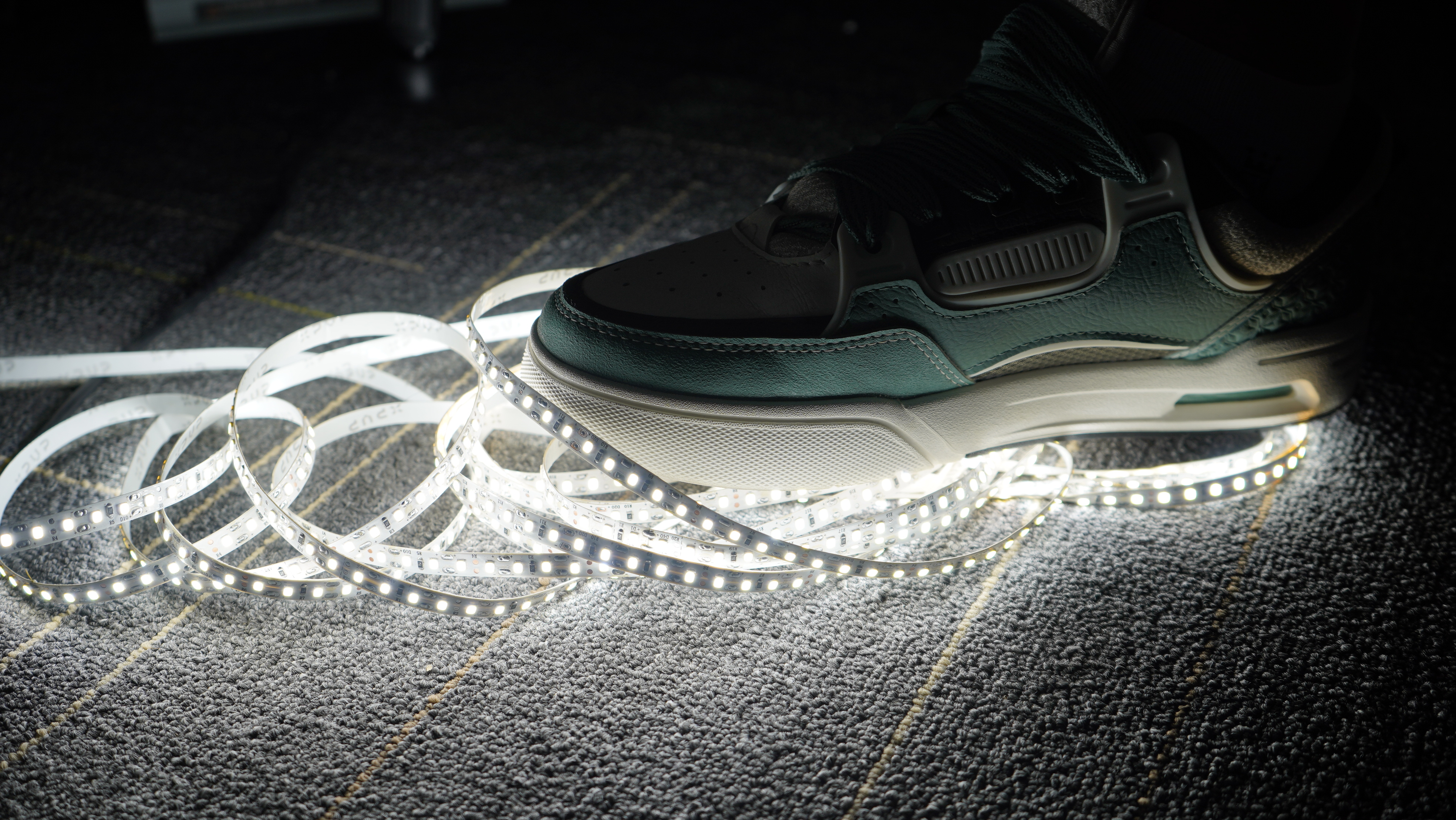 Low-voltage 24V strip on a double-layer copper PCB — the construction detail to confirm in writing before mass production.
4. LED Density Verification
Density is the specification most often substituted between sample and mass production, because it is the easiest line item to reduce without changing the visible shape of the reel. On a wall surface, reducing density directly increases the risk of visible dotting behind a diffuser and reduces the evenness of the wash.
Within the XPUP portfolio, wall-lighting-relevant density options range from 120 LEDs/m (XP-BD15DC24V-2835-120D-5MM, XP-B10DC24V-2835-120D-8MM) and 140 LEDs/m (XP-BD18DC24V-2835-140D-8MM) up to 180 LEDs/m (CA-DC24V-2835-180D-8mm-3000K and B7-DC24V-2835-180D-10MM), 192 LEDs/m (XP-D4DC24V-2835-192D-8MM) and 280 LEDs/m on the COB model XP-CH1DC24V-2025-280D-8MM.
The acoustic wall strip sits at 180 LEDs per metre on an 8mm board, which is the density band that supports a continuous wall wash on premium residential and hospitality walls. Since high-density variants above 120 LEDs/m represent close to 19% of premium installations, density is a specification you should be able to verify physically — count the LEDs across a measured one-metre section of the sample, and request the cut-pitch drawing.
5. CRI Verification (Ra≥80 and Above)
Colour rendering is the quality claim most frequently over-promised and least frequently tested. Wall lighting typically lights what people look at — skin tones, timber grain, textiles, artwork — so CRI is a visible performance metric, not a technical footnote.
For architectural wall programs, Ra≥80 is the practical minimum, and the XPUP acoustic wall strip is specified at Ra≥80. Higher-rendering options exist within the same supplier portfolio where the project demands it: Ra≥90 on XP-BD15DC24V-2835-120D-5MM, XP-B10DC24V-2835-120D-8MM and B7-DC24V-2835-180D-10MM; Ra≥95 on XP-D4DC24V-2835-192D-8MM and XP-D11DC24V-2835-120D-8MM; and Ra≥97 on XP-BD18DC24V-2835-140D-8MM.
Before mass production, request the CRI value with its test method and a batch report, not a marketing figure. A supplier that can supply Ra≥97 on one model and Ra≥80 on another is demonstrating binning discipline — which is exactly what protects a wall program from a colour shift in the third shipment.
Verification rule: verify density and CRI on a physical sample from the production LED bin, before the purchase order — not from a catalogue page. These two values cause the majority of rework claims in wall lighting programs because they degrade silently and only become visible after installation.
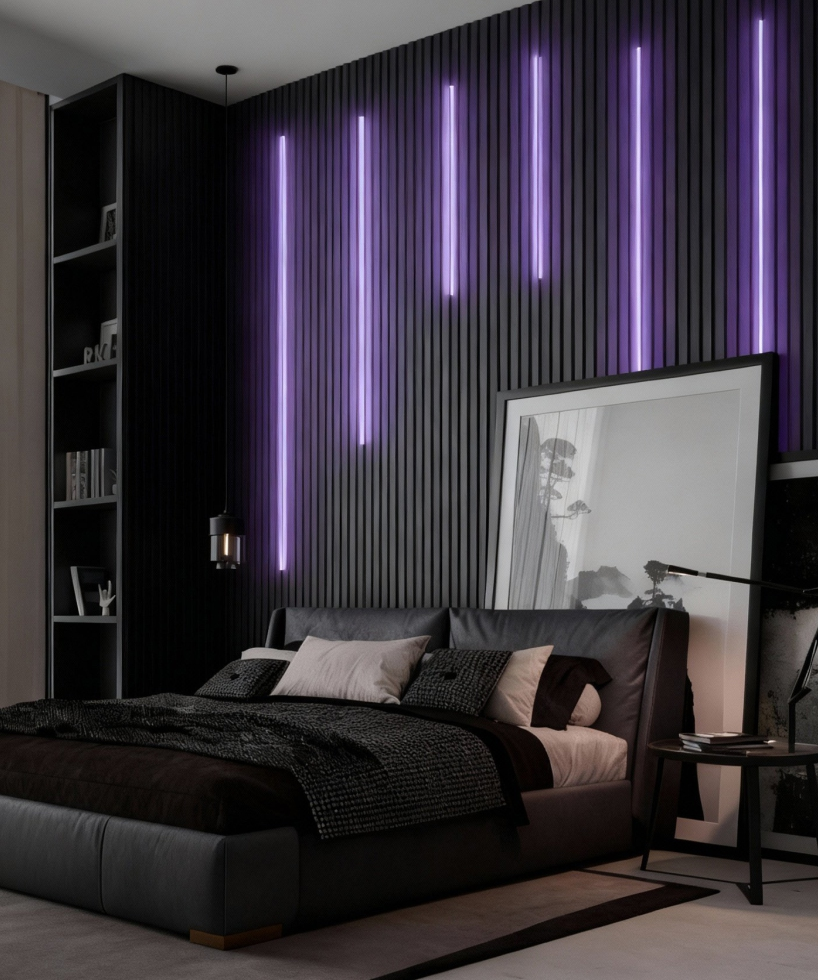 On a finished wall, density and CRI are the two specifications a customer notices first — and the two that are hardest to correct after installation.
6. Compliance Documentation for the Target Market
Compliance is a market-access question, not a formality. Build the document list around the destination market for your wall lighting line:
- EU: CE marking and RoHS compliance, with reference to ErP and Ecodesign energy-efficiency requirements.
- USA: low-voltage LED strips (12V/24V) fall under the safety standard UL 2108 (UL Standards & Engagement).
- Global reference: IEC 60598-2-20:2022 specifies safety requirements for lighting chains including LED strips.
Then verify the supplier's own qualification record, because certificates issued to the factory are the only ones that mean anything in an OEM relationship. Xiangpai Lighting holds CE and RoHS certification for its products, operates a compliance system aligned to EU market-access requirements, and has received industry recognitions including Top Ten Linear Lighting Brands, Top Ten No-Main-Light Lighting Brands and Quality Linear Lighting Manufacturer.
Under a private-label arrangement, confirm that the documentation package can be issued against your label and model naming, not the factory's. This is where ODM programs commonly stall.
7. Capacity, MOQ, Lead Time and Test Protocol
The final checkpoint is whether the supplier can physically deliver the program on schedule — and whether it can prove each unit was tested. For a wall lighting OEM line, ask for four numbers and one protocol:
- Monthly capacity: Xiangpai Lighting operates at 3,000,000 meters per month, from a 10,000 m² factory with an annual output of 35,000,000 meters.
- MOQ: 2,000 meters for both OEM and ODM programs.
- Lead time: 18–22 days.
- Quality control: 100% test — not sample inspection.
- After-sales: a 2-year warranty with dedicated technical support and remote debugging for OEM programs, and online remote support with general technical guidance for ODM programs.
Capacity matters disproportionately for wall lighting, because wall programs tend to scale in project waves. A supplier that can prepare inventory during low seasons and hold supply through peak seasons protects your delivery commitments; a supplier running at the edge of capacity will move your production slot.
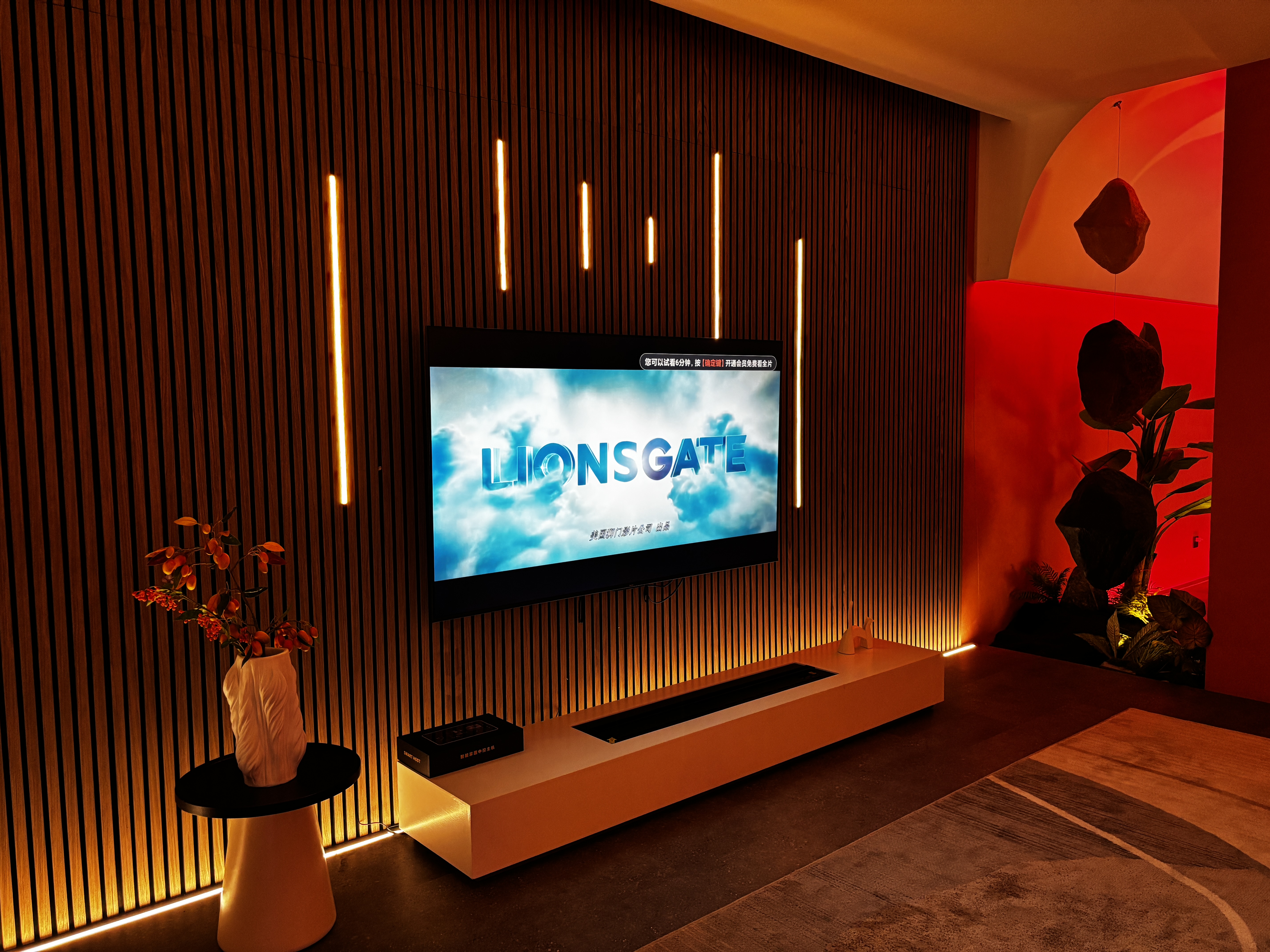 A sample should be evaluated as a production commitment — profile fit, density, colour temperature and construction, not appearance alone.
Step-by-Step: Validating a Wall Lighting Strip Before Mass Production
Run these steps in sequence. Each one filters out a supplier type that would otherwise cost you a production cycle.
- Write the wall specification before the purchase order. Define voltage (24V), power per metre, CRI target (Ra≥80 minimum), colour temperature, LED density, PCB width, PCB layering, IP rating, cut pitch and the wall profile the strip must fit — for example a 13mm/15mm slat wall panel gap.
- Request a sample matched to the wall profile, not a generic reel. Xiangpai Lighting's acoustic wall strip, for example, is specifically developed to fit 13mm/15mm slat wall panels, with a black surface that blends into the wall and enough flexibility to follow shaped runs.
- Verify density and CRI on the physical sample. Count LEDs over a measured metre. Confirm the CRI value with the test report. Do this before any commercial discussion.
- Confirm PCB construction and layout. Ask for confirmation of copper PCB and double-layer construction, plus the SMD package used (2835, 3535, 5050, 6060 or 2025 depending on model).
- Lock the OEM/ODM customisation scope and artwork. OEM customisation at Xiangpai Lighting covers voltage, logo, power, dimensions, materials, hardware configuration, internal circuit, colour, factory specifications, nameplate and label. ODM customisation covers exterior colour scheme, outer packaging box, label, brand information, model name and material details. Agree all of it in writing before tooling or artwork is committed.
- Approve a pilot run and define batch control. Require consistent colour temperature and brightness across the pilot, with controlled batch-to-batch colour differences — the operational standard Xiangpai Lighting applies to standardised mass production.
- Retain a golden sample and release mass production. Keep the approved sample sealed, and make the 100% test protocol a contractual line item alongside the 2-year warranty.
Steps 1–4 can be completed in a single sampling cycle. Steps 5–7 are what convert a one-off approval into a repeatable OEM supply relationship.
Wall Lighting Strip Models to Benchmark Against
Use the table below as a reference set when writing your own specification. Every value is a manufacturer-published specification from the XPUP LED range, which is useful because it shows how density, CRI and PCB width trade against each other on the same platform.
| Model | Type | Voltage / Power | LEDs per metre | CRI | PCB width | PCB material | IP rating |
|---|---|---|---|---|---|---|---|
| CA-DC24V-2835-180D-8mm-3000K | Acoustic Wall LED Strip Light | 24V / 11W | 180 | Ra≥80 | 8mm | Double-layer copper PCB | IP20 |
| XP-BD15DC24V-2835-120D-5MM | SMD LED Strip Light | 24V / 8W | 120 | Ra≥90 | 8mm | Double-layer copper PCB | IP20 |
| XP-BD18DC24V-2835-140D-8MM | DC LED Strip Light | 24V / 12W | 140 | Ra≥97 | 8mm | Double-layer copper PCB | IP20 |
| B7-DC24V-2835-180D-10MM | Flexible LED Strip Light | 24V / 15W | 180 | Ra≥90 | 10mm | Double-layer copper PCB | IP20 |
| XP-D4DC24V-2835-192D-8MM | Dimmable LED Strip Light | 24V / 15W | 192 | Ra≥95 | 8mm | Double-layer copper PCB | IP20 |
| XP-CH1DC24V-2025-280D-8MM | COB LED Strip Light | 24V / 10W | 280 | Ra≥80 | 8mm | Double-layer copper PCB | IP68 |
| XP-C13DC24V-6060-48D-10MM | Commercial LED Strip Lights | 24V / 18W | 48 | Ra≥90 | 10mm | Double-layer copper PCB | IP65 |
Read the table as a decision map rather than a ranking. The acoustic wall model balances a narrow 8mm board against 180 LEDs/m at Ra≥80 — the combination that suits slat and acoustic panel walls. Where rendering matters more than profile, Ra≥95 and Ra≥97 models exist on the same 24V, double-layer copper PCB platform. Where the wall run moves outdoors, the COB and commercial models step up to IP68 and IP65 respectively.
Use Cases: How These Checks Play Out in Real Programs
Supplier evaluation is easiest to calibrate against completed programs. The following are documented XPUP LED supply cases, each of which maps to a different part of the checklist.
- US lighting brand — ODM private label, 300,000 meters per year over 3 years. A long-term ODM LED strip program covering product specifications, colour parameters, certification requirements and packaging customisation, supported by stable manufacturing and quality control for continuous market supply. This is the scenario where the ODM customisation list (exterior colour scheme, packaging box, label, brand information, model name, material details) becomes the contract.
- German DIY retail chain — 100,000 meters per year, 3 years. A complete LED strip range supplied into retail channels with customised retail packaging, covering residential, outdoor and commercial lighting applications. Density and CRI consistency across a broad SKU range is the evaluation priority here.
- French distributor — 80,000 meters per year. CRI 90+ COB LED strips supplied for residential lighting retail and distributor channels, selected for accurate colour rendering and uniform illumination. This is a direct example of why CRI claims must be verified before mass production rather than accepted from a datasheet.
- Germany and Italy — home decoration distributor, 20,000 meters per year. Premium residential projects using RGB LED strips and acoustic panel LED strips, delivered as precision-customised solutions with seamless integration into contemporary interiors. Acoustic panel wall programs are the closest real-world analogue to OEM wall lighting lines.
- Netherlands — architectural contractor, 30,000 meters. IP68 waterproof LED strips used for commercial façade and outdoor landscape lighting, where high-level waterproof protection and UV resistance were the defining requirements. Useful as a boundary case: it shows how the same evaluation logic shifts when the wall moves outside.
- Germany — hospitality contractor, 20,000 meters over 2 years. High-efficiency and IP68 waterproof LED strips applied across hotel public area and architectural façade lighting, maintaining consistent brightness and colour quality over long-term operation.
Three of these six cases are European wall and interior lighting programs, which is consistent with Europe being the fastest-growing regional market for linear LED strips at a CAGR of 12.6%. If your target market is EU or North America, the compliance and CRI checkpoints should carry the most weight in your scorecard.
Frequently Asked Questions
What certifications should an LED strip supplier provide for an OEM wall lighting program?
For the EU, CE and RoHS documentation is the baseline, and it should be read alongside ErP and Ecodesign energy-efficiency requirements. For the United States, low-voltage LED strips running at 12V/24V are classified under the UL 2108 safety standard, while IEC 60598-2-20:2022 specifies safety requirements for lighting chains including LED strips at international level. Xiangpai Lighting products hold CE and RoHS certification, and the company operates a compliance system aligned to EU market-access requirements. For a private-label program, always confirm that the documentation can be issued against your brand name and label — not only the factory's.
Which specifications should be verified before approving a wall lighting strip for mass production?
Verify five things on a physical sample: the 24V low-voltage architecture and its supporting control equipment; copper PCB with SMD LED assembly; double-layer PCB construction and its voltage-drop behaviour over your maximum run length; LED density per metre; and the CRI value with its test method. On the XPUP acoustic wall model CA-DC24V-2835-180D-8mm-3000K, the published specification is 24V, 11W, 8mm double-layer copper PCB, 180 LEDs per metre, 3000K, SMD 2835 and Ra≥80, with a design developed for 13mm/15mm slat wall panel fitting. Confirm density and CRI from the production LED bin before the purchase order, not from a catalogue page.
What drives the cost of an OEM LED strip program?
Cost is driven by specification choices rather than by a single price line, and the main variables are LED density per metre, the CRI band (Ra≥80, Ra≥90, Ra≥95 or Ra≥97), PCB width and layering, the SMD package used (2835, 3535, 5050, 6060 or 2025), the IP rating required by the installation environment, and the scope of customisation. OEM customisation covers voltage, logo, power, dimensions, materials, hardware configuration, internal circuit, colour, factory specifications, nameplate and label; ODM customisation covers exterior colour scheme, outer packaging box, label, brand information, model name and material details. Each added variable increases tooling and quality-control effort, so the most cost-effective approach is to fix the wall specification first and price against it, rather than comparing reels on headline price alone.
Can a supplier provide samples before mass production?
Yes, and sampling should be treated as a formal validation stage rather than a courtesy. Request a sample built on the target wall profile and from the intended production LED bin, then verify density, CRI, colour temperature and PCB construction against the specification sheet. Xiangpai Lighting supports rapid sampling as part of its OEM/ODM process, with a defined sequence covering product customisation, sample confirmation, mass production, international delivery and after-sales support. Minimum order quantity is 2,000 meters, lead time is 18–22 days, and every unit passes a 100% test before shipment.
What lead time and MOQ should I expect for an OEM wall lighting order?
For a supplier structured around wall lighting OEM work, an MOQ of 2,000 meters and a lead time of 18–22 days is a realistic benchmark, which is the published position for both OEM and ODM programs at Xiangpai Lighting. Capacity behind that lead time is the real question: Xiangpai Lighting operates at 3,000,000 meters per month from a 10,000 m² factory with an annual output of 35,000,000 meters, exporting to customers across EU and US markets among more than 170 countries and regions. A supplier that can build inventory in low seasons and hold supply through peak seasons is the one that protects your delivery commitments — which is why capacity belongs in the evaluation checklist, not in the negotiation afterwards.
Conclusion: Turn the Checklist Into a Supply Decision
Evaluating an LED strip supplier for OEM wall lighting programs is not a pricing exercise. It is a specification-verification exercise, and it follows a fixed order: confirm the 24V architecture and its control ecosystem, confirm copper PCB with SMD LED assembly and double-layer layering, then verify LED density and CRI on a physical sample before mass production, then lock compliance documentation, customisation scope, MOQ, lead time and the 100% test protocol.
Wholesalers who run that sequence once, properly, tend to keep the same supplier for years — as the documented three-year ODM and retail programs illustrate. Wholesalers who skip it tend to re-source after the first wall installation reveals what the sample concealed.
Zhongshan Xiangpai (XPUP) Lighting Technology Co., Ltd. is an LED strip source manufacturer founded in 2012 in Zhongshan, Guangdong, operating a 10,000 m² factory with 80 employees, a six-engineer R&D team and an annual output of 35,000,000 meters, serving EU and US markets through OEM and ODM programs.
Start your wall lighting program with a verified sample
Send your wall specification — voltage, density, CRI target, PCB width, panel gap and packaging requirements — and request an acoustic wall strip sample matched to your profile, or ask for a quotation against your target market.
Email: sales001@xpupled.com | Tel / WhatsApp / WeChat: +86 189 8858 4085 | Website: www.xpupled.com
Download the full 2026 XPUP LED Strip Catalog: 2026 XPUP LED Strip Catalog (PDF)
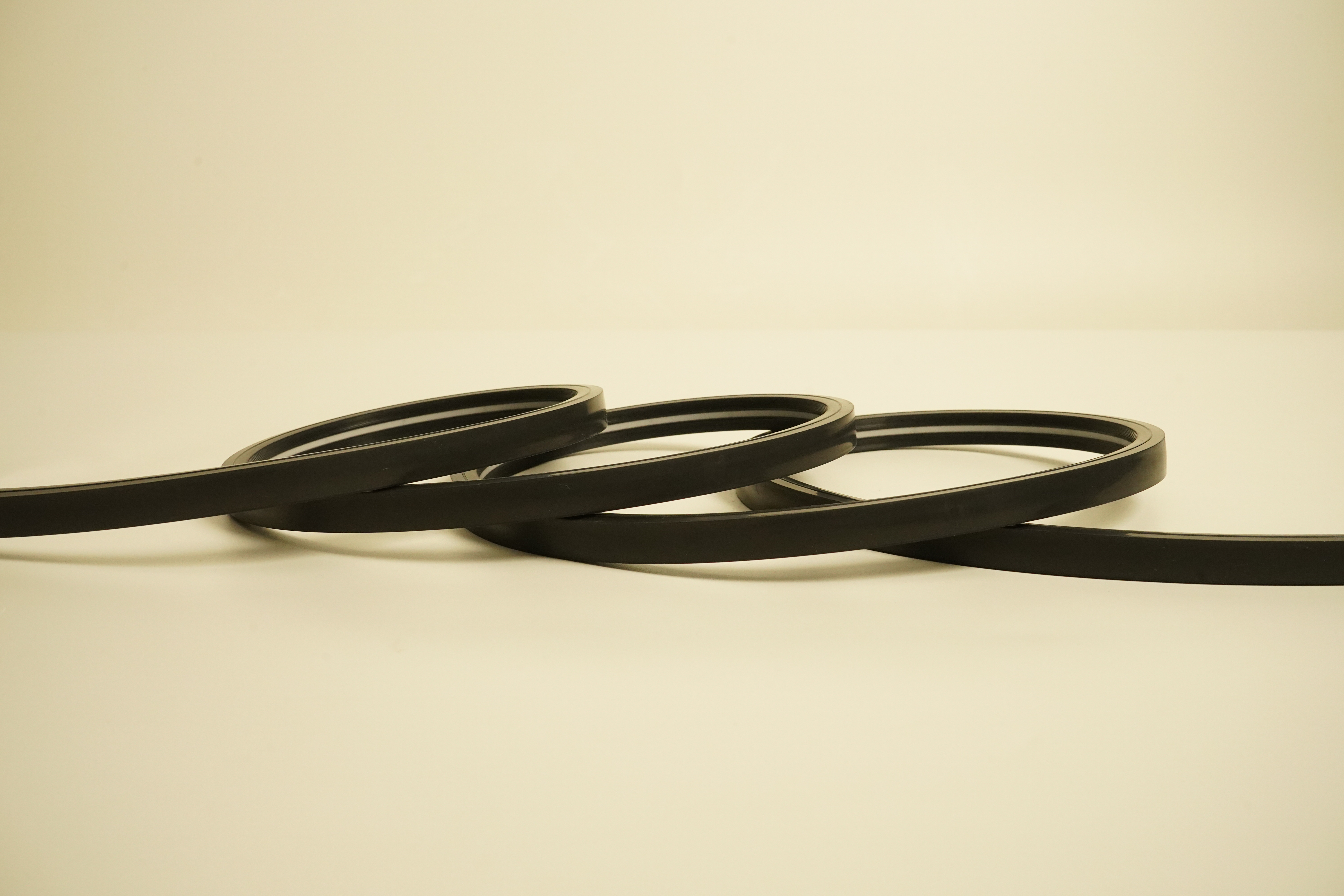 Request an acoustic wall LED strip sample matched to your panel profile, density and CRI target before releasing mass production.
Have Questions or Need More Details?
Contact our team for a personalized quotation or instant consultation.
Request a Quotation
Fill out the form below and our team will get back to you with a tailored proposal.
WhatsApp Direct Chat
Prefer to chat in real-time? Message us on WhatsApp for instant assistance & quick answers.
- Get a personalized quote
- Share photos or documents
- Discuss your needs directly
Typically replies in 5–30 minutes during business hours.