LED Lighting Manufacturers: How to Choose a Linear Lighting Supplier for Global Projects
LED Lighting Manufacturers: How to Choose a Linear Lighting Supplier for Global Projects
LED lighting has become the default choice for modern residential, commercial, and hospitality projects. The global LED lighting market was valued at USD 106.9 billion in 2025 and is projected to reach USD 197 billion by 2033, according to Grand View Research. As a buyer, brand manager, or engineering firm, working with the right LED lighting manufacturer is critical to controlling quality, meeting compliance requirements, and delivering projects on time.
This guide explains what to look for in a linear lighting supplier, compares different product categories, and provides practical criteria to help you evaluate manufacturers. It focuses on the key decisions that affect project success: product range, certifications, customization capability, quality control, and delivery reliability.
What Does an LED Lighting Manufacturer Do?
An LED lighting manufacturer designs, produces, and often customizes LED-based lighting products. Unlike a trading company, a source manufacturer directly controls production, quality testing, and customization processes.
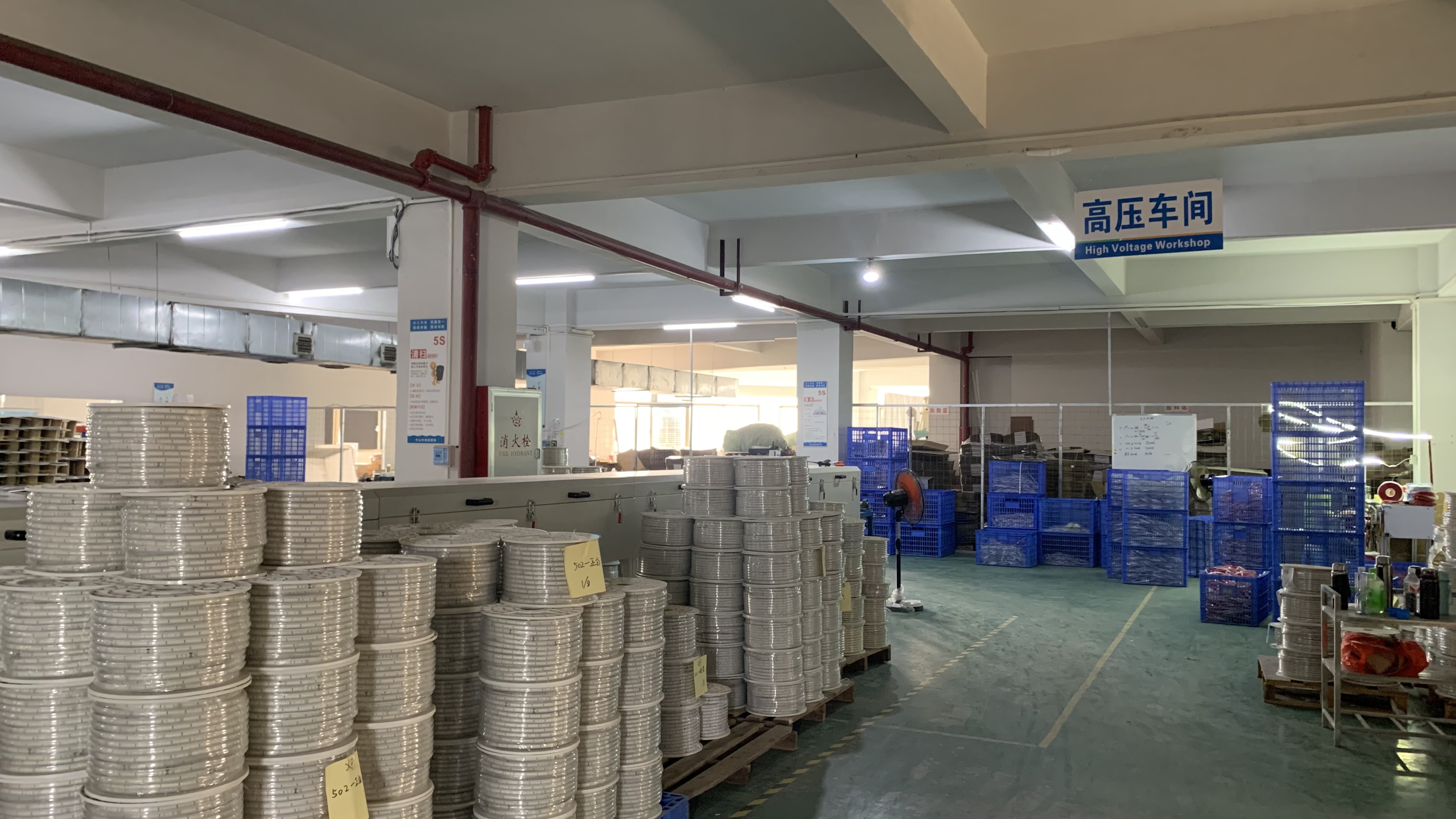
Zhongshan Xiangpai (XPUP) Lighting Technology Co., Ltd. is an example of a source manufacturer in this space. Founded in 2012 in Zhongshan City, China—the lighting capital of China—XPUP specializes in LED strip and linear lighting products, including flexible LED strips, magnetic track lights, smart lighting, and linear profiles. The company operates a 10,000 m² factory, employs around 80 people, and produces an annual output of up to 35,000,000 meters of LED strip. It exports predominantly to the EU and USA.
Manufacturers typically offer a combination of standardized mass production, OEM/ODM customization, and wholesale supply. This matters because buyers often need one supplier that can handle both stable repeat orders and specialized brand-specific development.
The Growing Demand for LED Lighting: Key Market Signals
Understanding current demand helps buyers anticipate supply chain needs and product trends. Several data points highlight the scale of the LED lighting market:
- The global LED lighting market was valued at USD 106.9 billion in 2025 and is expected to reach USD 197 billion by 2033 (Grand View Research).
- Lighting accounts for approximately 8% of global electricity demand, roughly 2,200 TWh in 2024 (IEA).
- 90% of U.S. households reported using LED bulbs for indoor lighting in 2024 (U.S. EIA).
- The smart LED lighting market was valued at USD 27.3 billion in 2024 (Grand View Research).
- The linear lighting market was valued at USD 30.09 billion in 2025, with a projected 11.42% CAGR through 2032 (Maximize Market Research).
These figures confirm that LED lighting is not just a niche technology—it is the mainstream infrastructure for modern indoor environments. Manufacturers that can support both standard and high-performance product lines are better positioned to serve global buyers.
Key Product Categories to Expect from a Linear Lighting Supplier
Not all LED lighting manufacturers offer the same depth. For linear lighting buyers, the following categories are especially relevant:
1. LED Strip Lighting
LED strip lighting is the core product of most linear lighting manufacturers. It is used in indirect lighting, cove lighting, under-cabinet lighting, wall washing, and accent lighting. A reliable manufacturer should offer multiple chip types (SMD 2835, SMD 5050, COB 2025), PCB widths, and LED densities to match different brightness and uniformity needs.
For example, XPUP's model DK3-DC24V-2835-240D-9.3mm is a linear lighting strip with 240 LEDs per meter, designed for high-density uniform light emission with no grainy appearance. It operates at 24V, uses 15W per strip, and offers CRI Ra≥80. This type of product suits indoor lighting strips and black profiles in restaurants, offices, and galleries.
2. Linear Lighting and Profile-Based Systems
Linear lighting includes aluminum profile systems, recessed/surface-mounted linear fixtures, and magnetic track systems. These solutions are popular in modern architecture for clean, continuous lines of light.
XPUP's XP-CX-18 is a magnetic track lighting fixture made of aluminum and PC, operating at 48V with a power of 30W. It offers a CRI of Ra≥90, a beam angle of 120°, and color temperatures of 3000K, 4000K, and 6000K. Magnetic track systems are widely used in retail, showrooms, and exhibition spaces for flexible accent lighting.
3. Smart Lighting and Tunable White
Smart lighting is one of the fastest-growing segments. Buyers increasingly expect compatibility with control systems, adjustable brightness, and tunable color temperatures.
XPUP's XP-SM-DC24V-5050-10MM is a smart lighting strip that supports RGB, 3000K, 4000K, and 6000K options. It uses SMD 5050/2835 LEDs with a density of 60D or 120D per meter, a double-layer copper PCB, and an IP20 rating. Key features include 20 meters non-voltage-drop, adjustable brightness/speed modes, and breakpoint resume functionality.
For projects that need tunable white light, models like XP-D11DC24V-2835-120D-8MM (2700K–6000K, CRI Ra≥95) provide flexibility for circadian lighting schemes.
4. Hospitality and Decorative Lighting
Hospitality projects demand high color rendering, warm color temperatures, and reliable long-hour operation. A dedicated hospitality lighting product line should deliver on all three.
XPUP's XP--BD14-DC24V-2835-144D-8MM is an ultra-linear LED strip designed for display cabinets, with a wide beam angle and CRI Ra≥95. It offers color temperatures of 2700K, 3000K, 3500K, 4000K, 5000K, and 6000K, making it suitable for hotels, resorts, aparthotels, and serviced apartments.
The XP-ZS-DC24V-2835-8MM decorative strip is another example, supporting both monochrome CCTs and RGB, with brightness/speed adjustable modes. It is intended for hospitality venues, restaurants, retail, and entertainment environments.
5. Full Spectrum and High CRI Lighting
Full-spectrum lighting is increasingly used in museums, galleries, luxury retail, and education spaces where color accuracy is critical. These applications typically require CRI Ra≥95 or higher and precise color temperature control.
XPUP's XP-BD18DC24V-2835-140D-8MM is a full-spectrum strip with CRI Ra≥97, 140 LEDs per meter, and a cut-at-every-LED design. It is suitable for jewelry stores, display cases, and museums.
6. Energy-Efficient and Commercial Lighting
Energy-efficient lighting is a baseline requirement for most commercial projects. High-lumen-per-watt performance and low power consumption help reduce operating costs.
XPUP's G7-DC24V-2835-126D-8mm is classified as energy-saving lighting. It delivers up to 200 lm/W with low power consumption, making it suitable for supermarkets, shopping malls, and mixed-use commercial complexes.
7. Acoustic Wall Lighting
Acoustic wall panels integrated with LED lighting are an emerging trend in interior fit-out projects. These solutions combine lighting and acoustics in one installation.
XPUP's XP-CA-DC24V-2835-180D-8mm-3000K was specifically developed for slat wall panels fitted at 13mm or 15mm. The black surface blends into the wall, and it is flexible enough to make shapes. It is designed for acoustic panel lighting, luxury residential, and interior fit-out projects.
How to Compare LED Lighting Manufacturers
When comparing manufacturers, buyers should evaluate several dimensions beyond published specifications. The table below summarizes the key comparison criteria.
| Criteria | Why It Matters | What to Look For |
|---|---|---|
| Manufacturing vs. Trading Company | Source manufacturers control quality, pricing, and lead times directly. | Factory size, production lines, in-house R&D, and quality testing. |
| Product Portfolio Depth | Broader range allows consolidation and reduces supplier risk. | Multiple types: LED strip, linear, magnetic track, smart, full spectrum, decorative. |
| Certifications & Compliance | Market access depends on valid certifications such as CE and RoHS. | Third-party certificates, compliance with EU/US standards. |
| Customization (OEM/ODM) | Brands need private-label, packaging, voltage, CCT, and PCB customization. | OEM/ODM capabilities, engineering support, sample turnaround. |
| Quality Control & Testing | Consistent color temperature, brightness, and low failure rates. | Automated production lines, aging tests, batch consistency. |
| Production Capacity & Lead Time | Large projects and peak seasons require stable supply. | Annual output, ability to stock inventory, delivery record. |
| Export Experience | Knowledge of international logistics, documentation, and market requirements. | Export markets, export ratio, familiarity with EU/US processes. |
Step-by-Step Guide to Evaluating an LED Strip Supplier
- Define your project requirements. Consider the application (residential, hospitality, commercial, outdoor), required brightness, CRI, color temperature, voltage, and IP rating.
- Shortlist manufacturers with relevant product lines. A supplier that already produces the specific category you need is more likely to meet your technical and quality expectations.
- Verify certifications. Check that products have the certifications needed for your target market, such as CE and RoHS for the EU and US market requirements.
- Assess customization capabilities. If you need OEM/ODM private-label production, confirm that the manufacturer can customize voltage, CCT, PCB, packaging, and other specifications.
- Request samples. Samples allow you to verify light output, color consistency, and build quality.
- Evaluate factory capabilities. Look for evidence of automated production, testing systems, and scaling potential.
- Review delivery and support processes. A professional manufacturer should handle logistics, customs, and after-sales communication effectively.
Use Cases: LED Strip Lighting Across Project Types
Hospitality & Hotels
LED strips are used in hotel lobbies, corridors, guest rooms, and restaurants to create warm, layered lighting. High CRI strips such as the XP--BD14 (CRI ≥95) help preserve material textures and create a premium feel. The hospitality lighting market was valued at USD 14.2 billion in 2025, emphasizing the scale of the segment.
Retail & Commercial Spaces
Retail environments need flexible lighting that highlights merchandise. Magnetic track lighting (like XP-CX-18) and high-brightness strips are common solutions. The commercial lighting market was estimated at USD 47.54 billion in 2024. Retail and mall projects often require quick installation, adjustability, and consistent performance across long operating hours.
Residential & Interior Design
Cozy, modern interiors increasingly use indirect lighting, under-cabinet lighting, and accent strips. The XP-A9DC24V-2835-120D-8MM is designed for kitchen and cabinetry lighting, with low-voltage safety and uniform light output. Residential LED penetration reached 63% of U.S. homes by early 2024, showing widespread adoption.
Museums & Galleries
Full-spectrum and high-CRI strips are essential for accurate color rendering. The XP-BD18 full-spectrum strip (Ra≥97) supports museum and gallery requirements, helping preserve artwork integrity while offering flexibility in lighting design.
Entertainment & Nightlife
RGB ambient strips are popular in KTV, nightclubs, esports arenas, and entertainment centers. The XP-D14DC24V-5050-60D-10MM supports dynamic color effects and background lighting decoration, fitting the dynamic atmosphere of these venues.
Quality and Compliance: What You Need to Know
Compliance with international standards is a non-negotiable requirement for lighting imports. CE and RoHS certifications are commonly required for EU market access. For the U.S., energy-efficiency requirements and safety certifications (such as UL or ETL) may apply depending on the product and jurisdiction. Buyers should always request current certificates and verify they correspond to the exact product models being purchased.
XPUP states that its products have passed CE and RoHS certifications and are manufactured according to applicable safety, environmental, and energy-efficiency standards. The company holds multiple patents in linear lighting, including original design patents for the C19 and C20 series LED strips.
Why Supplier Experience in EU/US Markets Matters
Experience in developed lighting markets provides several advantages:
- Familiarity with EU and US market access requirements.
- Understanding of aesthetic preferences and product specifications.
- Established supply chains for long-term private-label production.
- Better alignment with engineering and architecture specifications.
XPUP focuses on high-end European and American markets and has exported to more than 170 countries and regions. Its export business accounts for 50% of total sales. This kind of experience helps avoid compatibility and compliance issues that can delay projects.
Comparison: Source Manufacturer vs. Trading Company
Understanding the difference between a source manufacturer and a trading company is critical for procurement decisions.
| Dimension | Source Manufacturer | Trading Company |
|---|---|---|
| Control over production | Direct control, better consistency | Limited, dependent on third-party factories |
| Customization | In-house R&D and engineering support | May require passing requirements to factories |
| Pricing | Factory direct, fewer intermediary margins | Additional trading margins |
| Quality traceability | Clearer traceability to production line | Less transparent |
| Lead time control | Direct scheduling and inventory management | Potentially longer and less flexible |
Limitations and Considerations When Buying from Global Manufacturers
Working with an overseas manufacturer requires attention to several practical issues:
- Voltage compatibility: Confirm the product voltage matches the destination country's standard or specify customization.
- Certification validation: Always ask for up-to-date certification documents for the exact model numbers.
- Sample testing: Test samples under your intended operating conditions before mass production.
- Communication and lead time: Factor in time zones, language differences, and shipping schedules.
- Minimum order quantities: Clarify MOQs early to align with your procurement plan.
Frequently Asked Questions
What certifications should a reliable LED lighting manufacturer have?
A reliable LED lighting manufacturer should have relevant international certifications such as CE and RoHS for the EU market, and compliance with applicable U.S. market requirements. These demonstrate that products meet safety, environmental, and energy-efficiency standards. Always verify that certificates are valid for the specific product models you plan to buy.
Can a manufacturer support custom LED strip specifications for a brand?
Many source manufacturers support OEM and ODM services. This typically includes customizing voltage, color temperature, PCB design, specifications, packaging, and even joint product development for lighting brands. If you are a brand, confirm the manufacturer's R&D and engineering capabilities before committing.
What is the typical sample process before mass production?
The sample process usually starts with communicating your product requirements, followed by sample development or selection of existing samples. After confirming the sample, mass production can proceed. A professional manufacturer can manage the full process—from sample confirmation to mass production and delivery.
How can a buyer verify product quality and factory capabilities?
Buyers can request production videos, factory audits, or product testing reports. Key indicators include automated production lines, strict product testing systems, and quality control processes. A manufacturer with its own R&D team and patents may also indicate stronger technical capabilities.
What lead time should a buyer expect for large orders?
Lead time depends on order size, product customization level, and current factory capacity. Established manufacturers with scaled production capacity and inventory management can support stable supply during peak seasons. It's advisable to discuss lead times early and plan for seasonal demand.
If you are evaluating suppliers for an upcoming project, you can request a sample or quote directly from XPUP to assess fit for your requirements.
Conclusion
Choosing the right LED lighting manufacturer is a strategic decision. A source manufacturer with a broad product portfolio, verified quality, and experience in international markets can simplify your supply chain and improve project outcomes.
When evaluating suppliers, prioritize technical specifications, certifications, customization ability, and production reliability. Manufacturers like Zhongshan Xiangpai (XPUP) Lighting Technology Co., Ltd. demonstrate how integrated R&D, production, and international trade capabilities benefit buyers.
To explore product options in detail, you can request a copy of the 2026 XPUP LED Strip Catalog or contact the sales team directly for specific project discussions.
Download the 2026 XPUP LED Strip Catalog
View the full product portfolio, specifications, and customization options.
Download CatalogEmail: sales001@xpupled.com | WhatsApp: +86 189 8858 4085
Have Questions or Need More Details?
Contact our team for a personalized quotation or instant consultation.
Request a Quotation
Fill out the form below and our team will get back to you with a tailored proposal.
WhatsApp Direct Chat
Prefer to chat in real-time? Message us on WhatsApp for instant assistance & quick answers.
- Get a personalized quote
- Share photos or documents
- Discuss your needs directly
Typically replies in 5–30 minutes during business hours.