
Acoustic Wall LED Strip Lights: Fixing Hotspots and Uneven Glow
Concealing light inside an acoustic wall panel is harder than sticking a strip to the back of a board. The finished surface has to read as one continuous piece of light-catching architecture. When it does not, the failure is almost always the same: bright dots where the LEDs are, darker gaps where they are not, a panel that looks brighter at one end than the other, or a hot band along the seam where the strip sits too close to the diffuser. The wall stops reading as a designed feature and starts reading as an exposed lighting component.
The Acoustic Wall LED Strip Light, model CA-DC24V-2835-180D-8mm-3000K, is built around that specific problem. It pairs SMD 2835 LEDs at 180 LEDs per meter with a narrow 8mm copper PCB, a 24V rated voltage, an 11W power draw, a 3000K warm white color temperature, CRI Ra≥80, and an IP20 rating for indoor acoustic wall applications. What follows is the practical decision path: what causes the uneven glow, what a panel-ready strip has to deliver, how this model maps to those requirements, and how a designer or panel specifier can verify the result before committing to a full project.
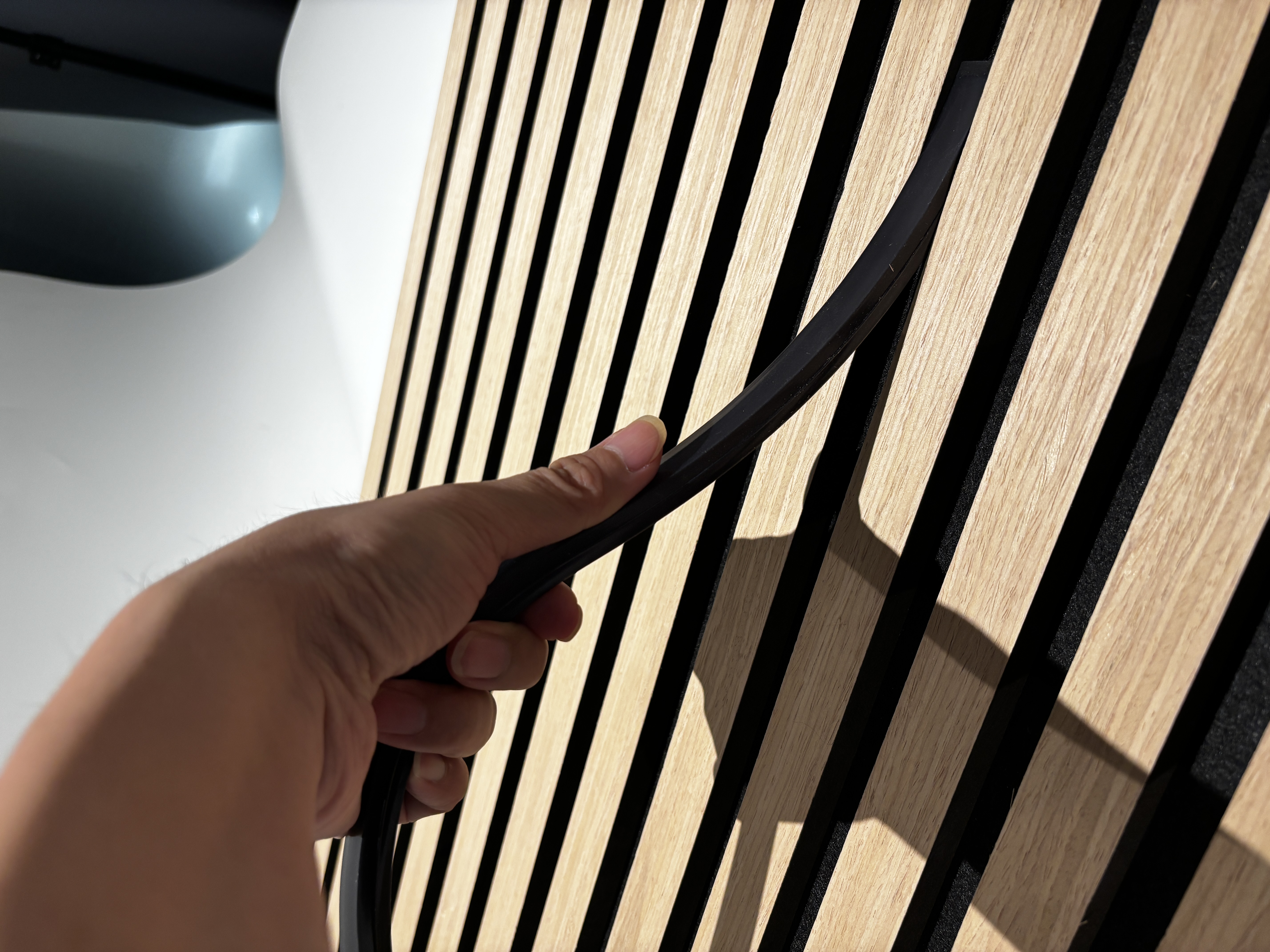
Why LED Strip Installations in Acoustic Panels Show Hotspots
A hotspot is a geometry problem, not necessarily a faulty fitting. Every SMD LED is a small, discrete point of light. When the distance from the LED to the panel's diffusing surface is short relative to the spacing between LEDs, each LED projects its own bright spot onto the visible face. The spots do not overlap enough to merge into a uniform line. At panel scale, that reads as a dotted or scalloped light band rather than a soft wash.
Three variables decide whether the panel shows a continuous glow or a visible row of LED points:
- LED pitch along the strip. The number of emitters per meter controls how close the light points are. Wider spacing leaves room for dark gaps between emitters; denser spacing gives the diffusion layer more overlapping light to work with.
- Distance from the emitter to the visible surface. A strip pressed directly behind a thin acoustic fabric or perforated facing has almost no diffusion distance. The closer the strip, the more each emitter behaves as a visible point.
- Light output consistency along the run. A strip that loses brightness along its length, or one whose voltage drops across a long wall, produces a gradient: bright at the feed end, dimmer at the far end. On a continuous panel, that gradient is easy to see.
A fourth factor is often overlooked at specification stage: the acoustic facing itself. Panel coverings vary in openness and light transmission. A covering that passes more light exposes the emitter pattern more clearly; a denser covering diffuses it further. The strip and the panel facing therefore have to be evaluated together, not independently.
What Uniform Glow Actually Requires from a Strip Light
For an acoustic panel, the job of the strip is to behave less like a row of individual bulbs and more like a thin, continuous light source. That translates into a small set of measurable requirements:
- High emitter density. More LEDs per meter shortens the pitch and gives the diffusion layer more sources to blend. The target is a spacing where individual emitters can no longer be resolved through the facing.
- A narrow PCB that fits the cavity. Acoustic panel channels and reveal details are usually tight. A strip that is wider than the slot forces a compromise: sit it proud and it shadows; bend or squeeze it and the pitch distorts.
- Stable 24V operation. A 24V DC design carries a lower current for the same load than a 12V design, which supports more consistent output on longer wall runs. This matters on full-height panel walls where a single feed may serve a long strip.
- A color temperature and CRI suited to the interior. Warm 3000K blends with residential and hospitality interiors, and Ra≥80 supports believable rendering of the acoustic fabric and adjacent finishes rather than washing them flat.
- An IP rating matched to the environment. Indoor dry walls call for an uncoated IP20 strip. Heavier coatings intended for wet areas add bulk and sit badly in tight panel channels when they are not needed.
None of these requirements is exotic on its own. The difficulty is that they usually have to be satisfied at the same time, in the same product, at a width that fits the panel.
The Product: Acoustic Wall LED Strip Light CA-DC24V-2835-180D-8mm-3000K
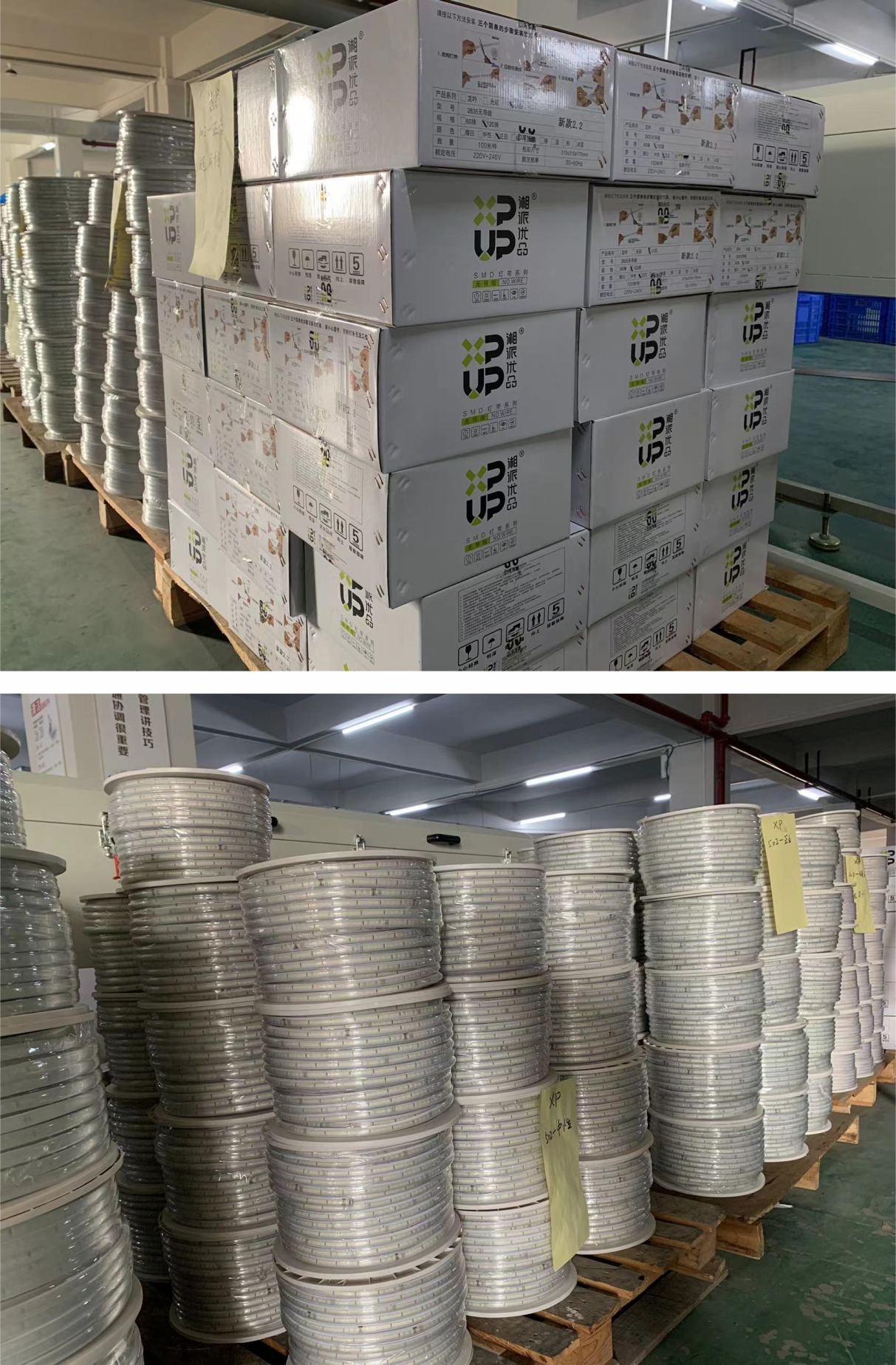
XPUP LED is the brand of Zhongshan Xiangpai(XPUP) Lighting Technology Co., Ltd., an LED strip manufacturer founded in 2012 in Zhongshan, China, with a 10,000 m² factory and products exported to markets including the EU and the USA. The company's official website lists its full linear lighting range. The Acoustic Wall LED Strip Light is the model the company positions for integration into compatible acoustic wall panels, and its specification set maps directly onto the hotspot problem.
| Specification | CA-DC24V-2835-180D-8mm-3000K | What it means in a panel build |
|---|---|---|
| LED type | SMD 2835 | A widely used, stable mid-power emitter format for linear interior lighting |
| LED density | 180 LEDs per meter | Short pitch between emitters, giving the diffusion layer more overlapping light |
| Color temperature | 3000K | Warm white suited to residential, hospitality and commercial interiors |
| Color rendering | CRI Ra≥80 | Supports natural rendering of acoustic fabric and adjacent finishes |
| Rated voltage | 24V DC | Low-voltage operation with lower current than 12V designs of comparable load |
| Power | 11W | Moderate draw for a decorative, indirect panel application |
| PCB width | 8mm | Narrow profile for tight panel channels and reveal details |
| PCB material | Copper PCB | Supports heat spreading and consistent electrical performance along the run |
| IP rating | IP20 | Indoor dry-environment protection, uncoated for a slim profile |
The 180 LEDs per meter density is the specification doing most of the work against hotspots. It is a high-density build for a 24V SMD strip, and the closer pitch means each emitter contributes to a combined band of light rather than to an isolated point. In practice, this is the difference between a panel that shows a soft wash and one that shows a dotted edge.
The 8mm width matters just as much in real panel details. Many acoustic panels are built with narrow rear channels or slim reveals. An 8mm strip fits those conditions without being forced, which preserves the LED pitch and the intended distance to the diffuser. Forcing a wider strip into a tight slot changes both, and it is one of the common ways an otherwise correct specification ends up looking wrong on site.
The copper PCB is a practical rather than a cosmetic choice. It supports heat spreading along the strip and consistent electrical performance over the run, which is relevant when a single length spans a full-height panel. The 24V rating works in the same direction: for the same load, lower current reduces the voltage-drop effect across a long strip, helping output stay visually even from one end of the wall to the other.
The 3000K color temperature and Ra≥80 rendering are selected for the interiors where acoustic panels usually appear. Warm white reads as ambient rather than as a lighting feature that competes with the room, and the CRI level is adequate for textile-faced and wood-veneer panels without pushing the specification into a different product class. IP20 is the correct rating for indoor dry installations — for example hotel rooms, living rooms and offices — and the uncoated construction keeps the strip slim enough for the panel cavity.
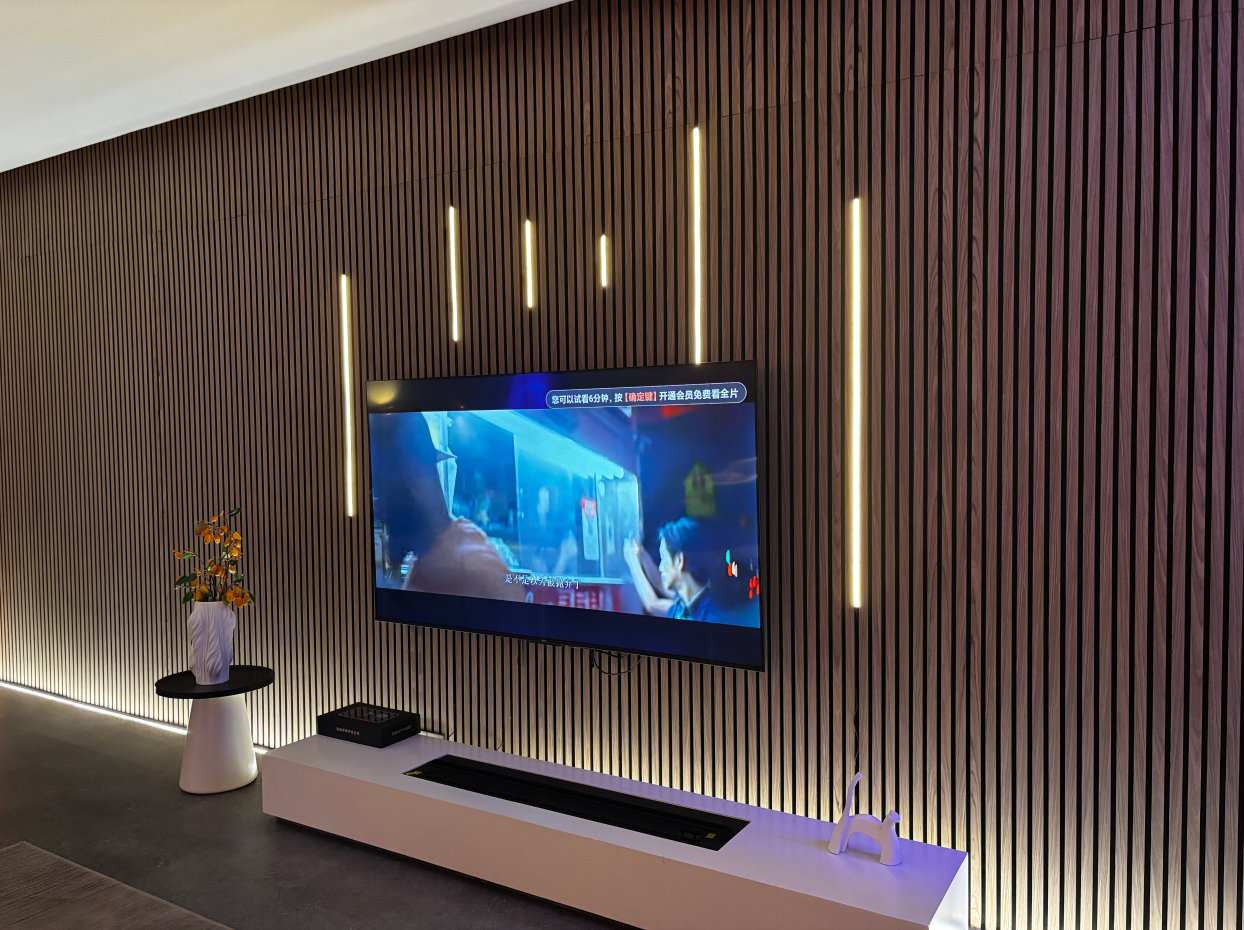
Specifying the Strip for Your Panel System: A Step-by-Step Path
Choosing the model is the first decision; confirming it against a real panel build is the second. The sequence below is the practical order for a designer or panel specifier moving from research into evaluation.
Step 1 — Confirm the environment and the IP requirement
Establish where the panel will be installed. For indoor dry interiors — hotel guest rooms, living rooms, meeting rooms, restaurants — IP20 is appropriate. If the wall is exposed to moisture, cleaning jets or outdoor weather, this model is not the right selection; a higher IP-rated strip should be considered instead. Getting this wrong at the start invalidates every later decision.
Step 2 — Check the panel channel against the 8mm width
Measure the rear channel or reveal where the strip will sit. The 8mm PCB needs to sit flat without being compressed or twisted, and it must maintain a consistent distance to the diffusion layer along the whole run. If the channel is irregular, the effective emitter-to-surface distance will vary, and that variation will show up as uneven brightness before the LED density itself becomes the limiting factor.
Step 3 — Review density against the facing material
180 LEDs per meter is a dense build, but the facing still matters. A more transparent acoustic fabric exposes emitter pattern more readily than a denser one. Before approving the detail, confirm the proposed strip and the proposed facing together, ideally on a physical sample of the actual panel. Density and diffusion are a paired decision.
Step 4 — Size the power supply to the connected load
The strip is a 24V DC product, so the power supply has to match the total connected load of the runs it feeds. Plan the layout so that the load on any one supply stays within its rated output, and avoid running a single feed far beyond the wall section it was intended to serve. On long panel walls, consider feeding from a position that keeps runs balanced rather than feeding everything from one end.
Step 5 — Plan control and dimming where the project needs it
Dimming and scene control are typically delivered through a compatible LED controller and power supply. For hospitality and luxury residential projects, confirm controller compatibility before the panel is closed up, because the controller and its wiring have to be accessible after installation. The acoustic panel application guidance for this strip lists a dedicated LED power supply and LED controller among the matched equipment, and it notes that the strip must match the panel structure and mounting dimensions.
Step 6 — Respect the operating conditions
The published operating range for the acoustic panel application is -20°C to +45°C. The strip should not be covered with objects, and it should be kept away from chemically corrosive environments. In a closed panel cavity, that means leaving the strip in the designed channel rather than burying it under adhesive, foam or panel backing that would trap heat.
Step 7 — Approve on a physical sample, not a render
Hotspot performance is a visual outcome, and it should be approved visually. Build a short section of the actual panel with the actual facing and view it at normal viewing distance under the intended dimming level. This is the step where a specification either confirms itself or reveals that the diffusion distance needs to change.
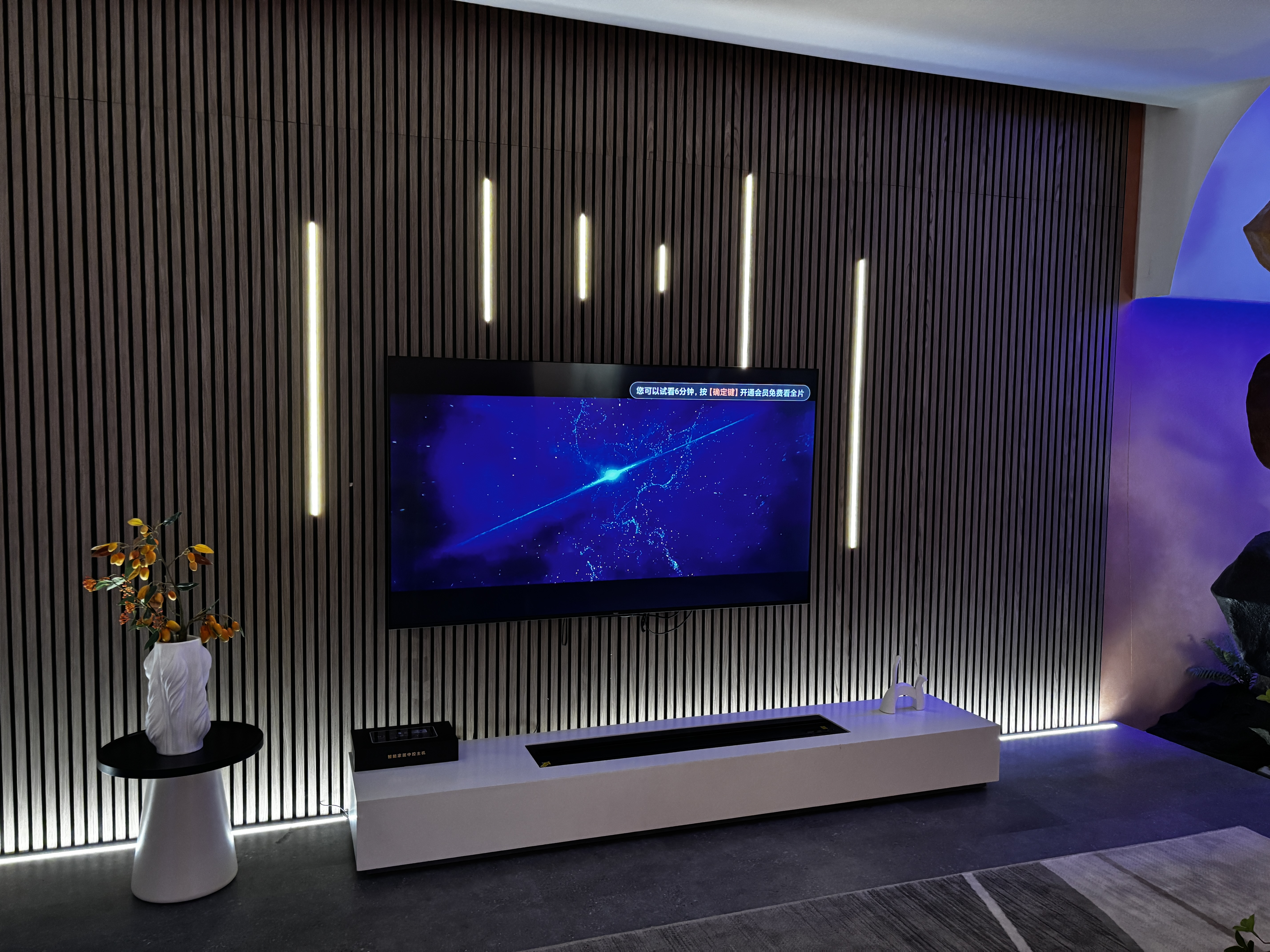
Where the Strip Fits: Hospitality, Luxury Residential and Commercial
The same specification serves several interiors, but the design intent shifts between them. The application guidance for this strip lists hotel rooms, living rooms, offices, meeting rooms, restaurants, home theaters, cinemas, and commercial spaces with acoustic wall panels.
Hospitality
Hotel guest rooms and public areas use acoustic panels for comfort and for visual warmth. A 3000K strip at Ra≥80 keeps the light calm and consistent with typical hospitality color schemes, while the 180 LEDs per meter density supports the soft, even wall glow that reads as considered design rather than as exposed product. In public areas, panel walls are viewed from a distance and in motion, so banding and hotspots are more noticeable, not less.
Luxury residential
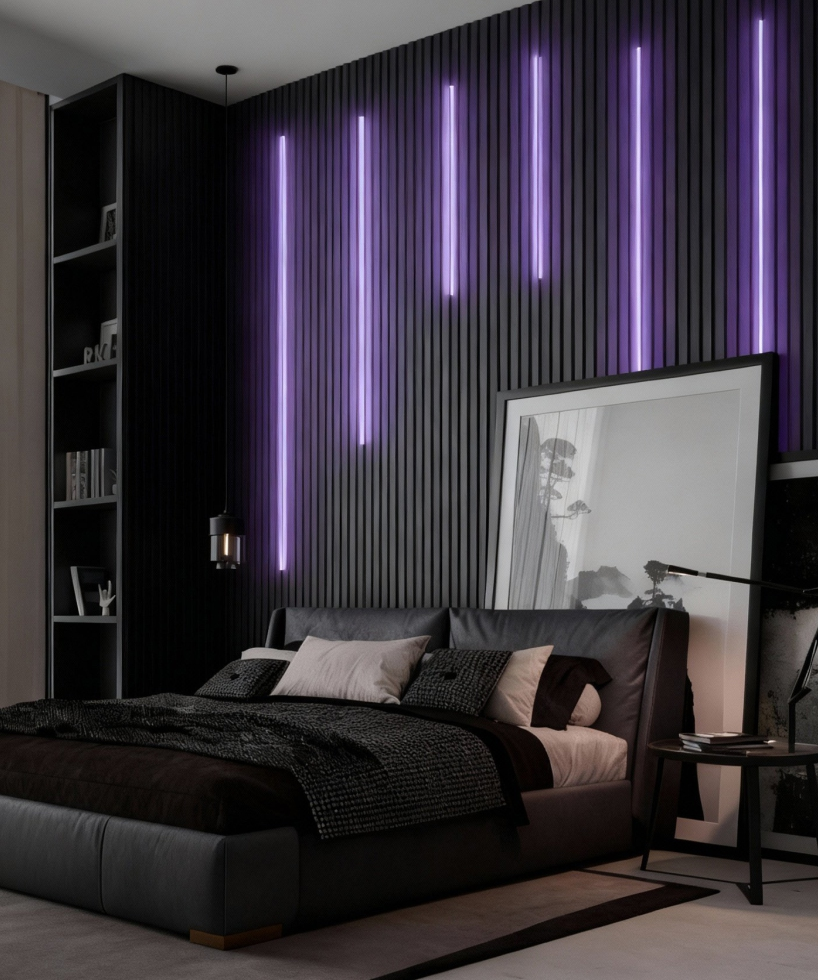
Living rooms, media walls and bedroom feature walls are the most demanding setting for evenness, because the viewer is close to the surface and often sees it at low dimming levels. At low output, an uneven strip becomes more visible, not less, since the eye adapts to the darker surround. Dense emitter spacing and stable 24V operation help the panel hold together at the dimmed settings these rooms actually use.
Commercial interiors
Offices, meeting rooms and restaurants use acoustic panel walls for acoustic control and for a finished architectural look. Here the strip is usually part of a repeatable detail across many panels, so consistency between panels matters as much as performance within one. A fixed specification — same model, same 3000K, same density — is easier to hold consistent across a large installation than a mixed selection.
Panel manufacturers and brands
For acoustic panel manufacturers, brands, distributors and wholesalers, the strip can be offered as a complementary product or as an integrated lighting kit. The value is that the lighting element is specified to the panel rather than sourced separately by each installer, which reduces the risk of mismatched density, color temperature or width across a product line.
Hotspot Risk Checklist for Designers and Panel Specifiers
Before signing off an acoustic panel lighting detail, run through the checks below. Each one targets a specific cause of uneven glow rather than the symptom.
| Check | Why it matters | How to verify |
|---|---|---|
| Emitter density | Wider pitch exposes individual LED points through the facing | Confirm 180 LEDs per meter on the specification sheet and inspect a lit sample |
| PCB width vs. channel | A forced fit distorts pitch and changes the distance to the diffuser | Dry-fit the 8mm strip in the actual panel profile |
| Diffusion distance | Too little distance makes every emitter visible | View the sample at the intended viewing distance and dimming level |
| Facing transmission | Open or thin coverings reveal the emitter pattern more readily | Approve strip and facing together, not separately |
| Run length and feed position | Long single feeds can produce a visible brightness gradient | Plan feed points so runs stay balanced across the wall |
| Power supply sizing | An undersized supply risks unstable output and reliability problems | Total the connected load and keep it within the supply rating |
| Environment and IP | IP20 suits indoor dry interiors; wet or outdoor walls need a different rating | Confirm the installation environment before ordering |
| Cavity conditions | Covering the strip or trapping heat affects performance and life | Keep the strip uncovered in its channel and clear of corrosive environments |
Procurement, OEM/ODM and Lead Times
Once the specification is confirmed, the commercial side decides whether the project can be delivered on schedule. XPUP publishes a minimum order quantity of 2,000 meters for this range, a lead time of 18–22 days, and 100% testing across production. Monthly capacity is stated at 3,000,000 meters, and after-sales support includes online remote support, general technical guidance and a 2-year standard warranty.
For panel manufacturers and lighting brands building a repeatable product line, OEM and ODM options are relevant. The OEM route covers customization of voltage, logo, power, dimensions, materials, hardware configuration, internal circuit, color, factory specifications, nameplate and label. The ODM route covers exterior color scheme, outer packaging box, label, brand information, model name and material details. For a panel-integrated kit, those options are usually what allow the strip to be packaged and branded alongside the panel rather than sold as a separate line item.
The company's case records include a home decoration distributor in Germany and Italy using acoustic panel LED strips and RGB strips in premium residential projects, with a stated focus on customized solutions and integration into contemporary interiors. That is a supplier-provided case record rather than an independent performance test, but it indicates the type of project this specification is intended for.
Projects differ in what they need to confirm before ordering. For a first panel system, a physical sample of the strip run inside the actual panel detail is usually the most informative step, because it tests density, diffusion distance and facing together — the three variables that decide whether the wall glows evenly.
Frequently Asked Questions
What causes visible LED hotspots in acoustic wall panels?
Hotspots occur when individual LED emitters remain distinguishable through the panel facing. The usual causes are insufficient emitter density, too little distance between the strip and the diffusing surface, or a facing that transmits more light than expected. Brightness variation along a long run can add a gradient effect on top of the dot pattern.
Does the CA-DC24V-2835-180D-8mm-3000K eliminate hotspots?
Its 180 LEDs per meter density and 8mm copper PCB are specified to reduce the visibility of individual emitters by shortening the pitch and fitting tight panel channels cleanly. The final result still depends on the panel's diffusion distance and facing material, which is why the strip should be approved inside the actual panel detail rather than on specification alone.
Is IP20 suitable for acoustic wall panel installations?
IP20 is appropriate for indoor dry environments such as hotel rooms, living rooms, offices and restaurants. It is not intended for wet, damp or outdoor walls. The strip should also be kept uncovered inside the panel cavity and away from chemically corrosive environments, within the published -20°C to +45°C operating range.
Can this strip be customized for a panel manufacturer's own product line?
Yes. XPUP offers OEM and ODM routes covering items such as voltage, dimensions, materials, internal circuit, labeling, packaging and brand information. The published minimum order quantity for this range is 2,000 meters, with a stated lead time of 18–22 days and 100% testing in production.
How should a designer evaluate the strip before a full order?
The most useful step is a physical mock-up: a short section of the real panel, with the real facing, lit at the intended dimming level and viewed from normal distance. This tests emitter density, diffusion distance and facing transmission together. A sample of the Acoustic Wall LED Strip Light can be requested from XPUP to support that evaluation, and the 2026 XPUP LED Strip Catalog lists the wider range for comparison.
Conclusion
Uneven glow in an acoustic wall panel is rarely a mystery once the causes are separated. It comes down to emitter pitch, the distance to the diffusing surface, and consistency of output along the run. The Acoustic Wall LED Strip Light CA-DC24V-2835-180D-8mm-3000K addresses those causes with 180 SMD 2835 LEDs per meter, a narrow 8mm copper PCB, 24V operation, 11W power, 3000K color temperature, CRI Ra≥80 and an IP20 rating for indoor acoustic wall applications.
For lighting designers, the practical next step is to confirm the panel channel and the facing, then approve a lit sample before the detail is closed. For panel specifiers and manufacturers, it is to decide whether the strip enters the product line as a complementary item or as an integrated kit, and to lock the specification so every panel in the project performs the same way.
Planning an acoustic panel lighting detail? Request a sample of the Acoustic Wall LED Strip Light, discuss OEM/ODM customization for your panel line, or download the 2026 XPUP LED Strip Catalog to compare specifications.
XPUP LED — sales001@xpupled.com | www.xpupled.com
Have Questions or Need More Details?
Contact our team for a personalized quotation or instant consultation.
Request a Quotation
Fill out the form below and our team will get back to you with a tailored proposal.
WhatsApp Direct Chat
Prefer to chat in real-time? Message us on WhatsApp for instant assistance & quick answers.
- Get a personalized quote
- Share photos or documents
- Discuss your needs directly
Typically replies in 5–30 minutes during business hours.