
How to Audit LED Strip Light Certifications and Specs Before You Commit
How to Audit LED Strip Light Certifications and Specs Before You Commit
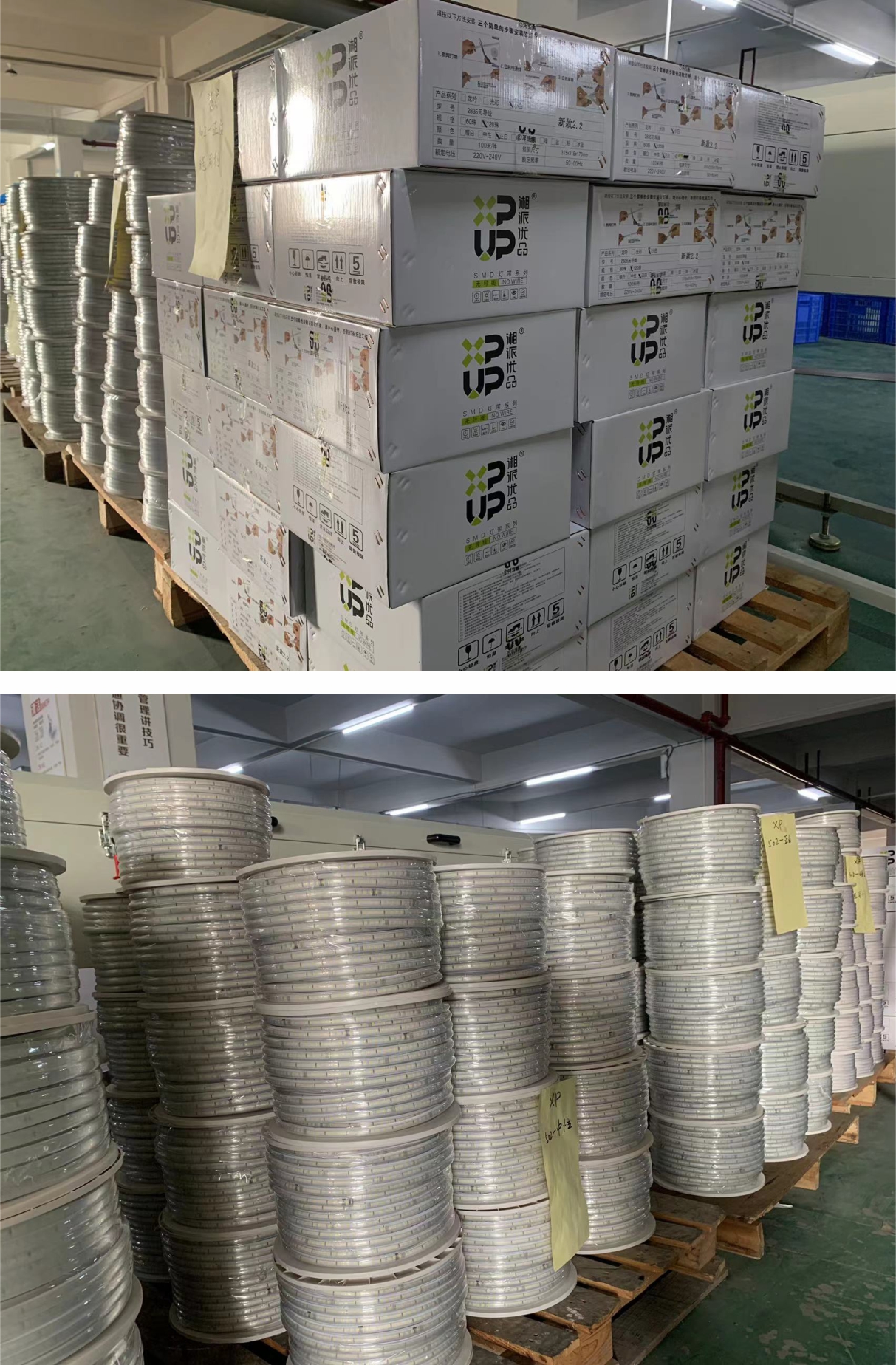
When procurement moves from a lighting idea to a supplier decision, an LED strip light stops being a decorative component and becomes a set of constraints: operating voltage, rated power, CRI, color temperature, LED density, PCB construction and ingress protection. In EU and North American projects, buyers also need documented conformity evidence, not just a CE symbol copied into a datasheet.
This article explains how to audit LED strip light certifications and specifications before you commit to a supplier. It covers the documents to request, the parameters to compare, and the practical limits that separate a reliable quote from a costly field failure. The examples use model-level data from Zhongshan Xiangpai(XPUP) Lighting Technology Co., Ltd., a source manufacturer of LED strips based in Zhongshan, Guangdong Province, China, and active in EU and US markets since 2012.
The core sourcing problem: attractive specs are not the same as verified specs
A buyer evaluating an LED strip light often receives a one-page datasheet with strong numbers: high CRI, high density, low power, IP68. The same datasheet does not always tell you whether the certificate is traceable, whether the batch will stay inside the same color temperature range, or whether the strip was designed for your installation environment.
The most common evaluation mistakes are not about finding a product. They are about missing constraints:
- A model states Ra≥90, but no test report links that value to the specific model number.
- A strip is labelled CE, but the buyer cannot identify the test house, the certificate number or the scope of covered product series.
- An IP rating is treated as universally suitable, although IP20, IP65 and IP68 serve completely different environments.
- A 24V system is selected without checking voltage drop behavior over long runs, PCB thickness and driver compatibility.
- Color temperature is selected on a photo, not on a defined Kelvin range with batch consistency control.
For professional buyers, the audit should therefore answer one central question: can this LED strip light manufacturer prove every constraint that your project or retail program depends on?
Industry background: why certified LED strip supply is becoming a standard requirement
The LED strip market continues to grow because LED strips are no longer limited to accent decoration. Third-party market data helps explain why buyers are moving toward documented specification and compliance control.
According to Dataintelo, the global LED strip market was valued at approximately USD 5.8 billion in 2025 and is projected to reach USD 13.2 billion by 2034, growing at a CAGR of 9.6%. Flexible LED strips are the largest product type, holding a 67.4% share in 2025. Commercial applications account for roughly 33.8% of global LED strip revenue, which explains why electrical contractors and lighting brands now evaluate LED strips with project-grade criteria.
Supply is concentrated in China. Data from OEC indicates that China exported approximately USD 31.4 billion in light fixtures in 2024, representing 59.3% of total global light fixture exports. The United States was the top destination for Chinese LED lighting exports in 2024, valued at USD 10.86 billion, followed by Germany at USD 2.097 billion. As import volumes rise, so does the need to verify that each LED strip model meets the electrical safety, electromagnetic compatibility and material restriction requirements of the destination market.
For EU buyers, the relevant conformity framework typically includes low-voltage safety (LVD), electromagnetic compatibility (EMC) and the RoHS restriction of hazardous substances. For North American low-voltage strip applications in the 12V/24V range, UL 2108 is the safety standard classification commonly referenced for these products. The practical takeaway: the market is large, but entry for lighting brands and engineering buyers is gated by compliance and parameter reliability.
A documented compliance baseline: CE, EMC and RoHS evidence for LED strip series
The first audit layer is documentation. A supplier should be able to present traceable certificates, including certificate numbers, issuing authority, applicable standards and scope.
Zhongshan Xiangpai(XPUP) Lighting Technology Co., Ltd. holds EU conformity documentation for its LED low-voltage and high-voltage light strip series. The documentation was issued by PTC TESTING. This is not a claim of additional market listing; it is the documented evidence that a buyer can request and verify during supplier evaluation.
The XPUP CE-LVD certificate numbers are PTC22122900901S-LD01 and PTC22122900902S-LD01, with an issue date of 2023-04-04. The tested standards include EN IEC 62031:2020 + A11:2021 for LED modules, IEC TR 62778:2014 for photobiological safety, and EN 62471:2008 for photobiological safety of lamps and lamp systems.
The CE-EMC certificate numbers are PTC22122900901E-EMB01 and PTC22122900902E-EMB01, issued on 2023-03-09. The applicable EMC standards include EN IEC 55015:2019+A11:2020 for lighting equipment radio disturbance characteristics, EN 61547:2009 for immunity requirements, EN IEC 61000-3-2:2019+A1:2021 for harmonic current emissions, and EN 61000-3-3:2013+A1:2019 for voltage fluctuations.
The RoHS certificate numbers are PTC22122900903C-EN01 and PTC22122900905C-EN01, issued on 2023-04-23. The RoHS test references the IEC 62321 series, including IEC 62321-1:2013, IEC 62321-2:2021, IEC 62321-3-1:2013, IEC 62321-3-2:2013, IEC 62321-4:2013+AMD1:2017, IEC 62321-5:2013, IEC 62321-6:2015, IEC 62321-7-1:2015, IEC 62321-7-2:2017 and IEC 62321-8:2017.
For a buyer, the value of this documentation layer is that it is model-series oriented, covers low-voltage and high-voltage strips, and provides external authority references. That makes it possible to ask a follow-up question: does the offered model number appear in the scope of the certificate and related product list?
Parameter audit: what to check before comparing LED strip light quotes
The second audit layer is specification. After compliance documents, the buyer should compare parameters that directly affect installation, appearance, driver sizing and long-term reliability.
Voltage and power planning
Low-voltage LED strip light systems are common in architectural and residential projects. According to Grand View Research, the 24V segment accounted for 52.0% of linear LED strip fixture market revenue in 2022. XPUP's product range is primarily built around 24V DC strips, for example the models XP-BD18DC24V-2835-140D-8MM, XP-CH1DC24V-2025-280D-8MM and XP-D6DC24V-5050-60D-10MM. Some outdoor and landscape models also offer 220V input versions, such as the XP-CH2AC220V-2025-240D-8MM outdoor LED strip.
Power per meter matters because it determines driver selection and thermal management. In the XPUP catalog, rated power varies from 5W/m on energy-saving models to 25W/m on ultra-bright high-output strips. For example, the G10-DC24V-2835-238D-10mm type consumes 25W/m and is positioned for commercial and mixed-use environments that need high brightness.
CRI and color temperature
CRI, expressed as Ra, indicates color rendering fidelity. For color-critical environments such as jewelry display, retail, hospitality and residential interiors, higher CRI values are usually required. XPUP offers models with Ra≥90 as a common baseline and Ra≥97 on the XP-BD18DC24V-2835-140D-8MM, which is described in the corpus as suitable for jewelry stores and display cases. The model XP-BD15DC24V-2835-120D-5MM provides Ra≥90 with 120 LEDs per meter, while the tunable white model XP-D11DC24V-2835-120D-8MM offers CRI Ra≥95 across a color temperature range of 2700K to 6000K.
Color temperature in the 3000K to 4000K range remains the most commercially significant segment. Grand View Research data shows that the 3000K-4000K segment held a 33.2% revenue share in the linear LED strip fixture market. Within the single-color XPUP series, common color temperature options include 2700K, 3000K, 3500K, 4000K, 5000K and 6000K, which gives a lighting brand the flexibility to define a consistent Kelvin specification.
LED density, luminous flux and PCB quality
LED density is expressed in LEDs per meter. Higher density helps eliminate point light effect and improves linear uniformity. For a COB LED strip light, XPUP's XP-CH1DC24V-2025-280D-8MM reaches 280 LEDs per meter and is described as a wide-beam-angle COB strip with even light distribution. For SMD strips, density typically ranges from 120 to 240 LEDs per meter, depending on the model. Market evidence from Business Research Insights suggests that high-density LED strip variants above 120 LEDs per meter account for nearly 19% of premium installations.
PCB construction is another parameter often underestimated. XPUP uses double-layers copper PCB across the main product line. Double-layer copper improves heat dissipation and reduces voltage drop risk over longer segments. The XP-BD18DC24V-2835-140D-8MM, for example, is specified with an 8mm double-layers copper PCB and a luminous flux of 55-65 lumens per LED.
IP rating and material selection
Ingress protection must match the physical environment. An IP20 rating means the strip is suitable for dry indoor use, and many indoor XPUP models carry IP20. An IP65 rating provides dust-tight performance and protection against water jets, as seen on the XP-C13DC24V-6060-48D-10MM architectural and commercial wall-washer LED strip. An IP68 rating indicates protection for continuous immersion, typically achieved through silicone extrusion or silicone tube construction.
XPUP's waterproof silicone LED strip models include the XP-C5DC24V-2835-120D-8MM with Ra≥90 and IP68, and the XP-C818DC24V-2835-120D-8MM with full silicone coverage. For landscape and façade lighting, the XP-CH2AC220V-2025-240D-8MM uses a silicone tube and IP68 protection. The audit logic is simple: never accept an IP rating without checking the material construction, because IP20, IP65 and IP68 refer to different installation realities.
A seven-step workflow for specification and compliance confirmation
To make the audit process repeatable, use the following workflow when evaluating a certified LED strip light manufacturer.
- Request certificate files. Ask for the CE-LVD, CE-EMC and RoHS reports that apply to the proposed LED strip light series. Record the certificate numbers, issuing authority, issue date and product scope. For the EU market, the relevant evidence should cover the series that includes the offered model.
- Map voltage to the destination market. Confirm whether the model is 24V DC, 220V AC or dual-voltage configurable. For long residential runs, verify voltage-drop behavior and cut constraints. The XP-A10 low-voltage LED strip, for example, is marketed with 20-meter no-voltage-drop performance and cut-at-will flexibility.
- Set CRI and color temperature based on the application. Do not use one CRI value for every project. For retail display and architectural environments, require Ra≥90, with Ra≥95 or Ra≥97 available when the project demands stricter color control. Confirm that the color temperature range is listed in Kelvin values rather than vague warm or cool terms.
- Check LED density and luminous flux. If a seamless linear effect is required, consider high-density SMD or COB configurations. COB strips such as the XP-CH1 provide 280 LEDs per meter; standard SMD models provide 120 to 180 LEDs per meter. Luminous flux per LED should be measured against the power consumption so that the final brightness calculation is realistic.
- Match IP rating and mechanical construction to the site. Dry indoor coves need IP20. Facade, bathroom-adjacent and commercial wash applications may need IP65. Outdoor landscape and building perimeter installations normally require IP68-grade waterproof construction.
- Assess batch-level consistency. Ask whether the manufacturer uses standardized mass production to control color temperature and brightness consistency, and whether batch-to-batch color difference is a documented part of quality control. XPUP states that its standardized production system is designed to ensure consistent color temperature, controlled batch differences and stable supply for wholesale customers.
- Verify quality control and production capacity. Check the factory's QC method and manufacturing scale. XPUP's OEM and ODM capability data lists 100% testing, a monthly capacity of 3,000,000 meters, a lead time of 18-22 days and an MOQ of 2,000 meters per item.
Comparison: how certified XPUP LED strip models differ by intended constraint
| Product type | Model reference | Voltage / power | CRI | LED density | IP rating | Typical application evidence |
|---|---|---|---|---|---|---|
| COB LED strip light | XP-CH1DC24V-2025-280D-8MM | 24V / 10W per meter | Ra≥80 | 280 LEDs/m | IP68 | Hospitality, garden, courtyard and interior fit-out lighting where wide-beam evenly distributed COB light is needed. |
| High-CRI DC LED strip light | XP-BD18DC24V-2835-140D-8MM | 24V / 12W per meter | Ra≥97 | 140 LEDs/m | IP20 | Jewelry stores, display cases and interior settings where color accuracy is the main constraint. |
| Waterproof silicone LED strip light | XP-C5DC24V-2835-120D-8MM | 24V / 8W per meter | Ra≥90 | 120 LEDs/m | IP68 | Residential ambient, commercial real estate, architectural and courtyard environments requiring silicone waterproof protection. |
| Tunable white LED strip light | XP-D11DC24V-2835-120D-8MM | 24V / 11W per meter | Ra≥95 | 120 LEDs/m | IP20 | Hospitality, residential and kitchen projects where tunable white from 2700K to 6000K must match changing scenes. |
| RGBIC smart LED strip light | XP-D6DC24V-5050-60D-10MM | 24V / 10W per meter | RGBIC color control | 60 LEDs/m | IP20 | Gaming rooms, display areas and entertainment spaces where addressable color effects are required. |
| Architectural / commercial wall-washer LED strip | XP-C13DC24V-6060-48D-10MM | 24V / 18W per meter | Ra≥90 | 48 LEDs/m | IP65 | Architectural wall washing and commercial lighting where IP65 dust and water-jet protection is needed indoors or in sheltered outdoor settings. |
Use cases: turning certification and specification constraints into project decisions
US lighting brand: ODM supply with fixed specifications and certification requirements
A US lighting brand sourcing private-label LED strips needs more than a standard catalog. The documented XPUP case describes a long-term ODM relationship supplying 300,000 meters per year for private-label retail and project supply over three years. Product specifications, color parameters, certification requirements and packaging were customized for the brand. For the buyer, the relevant audit outcome was not a single product price but a repeatable system where the certificate scope, model number and packaging language remain aligned across shipments.
German café and retail project: COB dimming and visual comfort
A commercial lighting contractor in Germany applied COB LED strip lights with dimming functions across café and chain retail environments. The documented case covers 50,000 meters over two years and highlights smooth, flicker-free and uniform illumination, with smart LED strips integrated to support different operating scenarios. In this case, the decisive constraints were dimming behavior, light uniformity and commercial-grade stability rather than maximum brightness.
French residential lighting distribution: CRI control for home applications
A French distributor buying 80,000 meters per year for residential lighting retail and distributor supply used CRI 90+ and COB LED strips. The two-year supply relationship demonstrates how a distributor translates a simple constraint, accurate color rendering, into a repeatable product range for consumers.
Netherlands façade contractor: IP68 as a non-negotiable parameter
For commercial façade and outdoor landscape lighting, waterproofing becomes the deciding constraint. A Netherlands architectural lighting contractor used 30,000 meters of IP68 waterproof LED strips over two years in façade and landscape applications. The documented case associates the product performance with high-level waterproof protection and reliable long-term outdoor use.
FAQ
Does XPUP carry CE and RoHS certifications for the LED strip light series?
Yes. XPUP holds CE-LVD, CE-EMC and RoHS documentation for its LED low-voltage and high-voltage light strip series, issued by PTC TESTING for the EU market. The CE-LVD reports are numbered PTC22122900901S-LD01 and PTC22122900902S-LD01. The CE-EMC reports are numbered PTC22122900901E-EMB01 and PTC22122900902E-EMB01. The RoHS reports are numbered PTC22122900903C-EN01 and PTC22122900905C-EN01. Buyers should request the full document set and confirm that the proposed model number falls within the covered product scope.
Can XPUP customize voltage, CRI, color temperature, PCB and private-label packaging on certified LED strip lights?
Yes. XPUP operates OEM and ODM production systems. OEM customization can cover voltage, logo, power, dimensions, materials, hardware configuration, internal circuit, color, factory specifications, nameplate and label. ODM customization can cover exterior color scheme, outer packaging box, label, brand information, model name and material details. The monthly production capacity is 3,000,000 meters, and the documented MOQ for OEM/ODM is 2,000 meters per item.
What is the minimum order quantity when buying certified LED strip lights?
For OEM and ODM LED strip orders, XPUP's documented MOQ is 2,000 meters per item. This quantity allows the factory to manage voltage parameters, PCB design, color temperature binning and packaging as a controlled production batch. Buyers with smaller first orders should discuss sample orders and standard stock availability directly with the sales team.
How can a buyer request certificate files, samples or a catalog before mass production?
XPUP provides the 2026 XPUP LED Strip Catalog as a public reference file. Buyers can also contact the XPUP international sales team by email at sales001@xpupled.com or by WhatsApp at +86 189 8858 4085 to request the relevant CE/RoHS documentation, discuss parameter verification and arrange samples before an order.
What is the normal lead time after sample approval?
XPUP's documented lead time for OEM and ODM LED strip production is 18-22 days after order confirmation. The factory runs a monthly capacity of 3,000,000 meters and reports 100% testing as its quality-control method. Buyers should still confirm the production schedule with the assigned sales contact at the quotation stage, because lead time depends on the selected model, customization depth and seasonal order load.
Ready to verify your LED strip light specification? Download the 2026 XPUP LED Strip Catalog or contact the XPUP LED international team for certificate files and sample qualification. Email: sales001@xpupled.com | WhatsApp: +86 189 8858 4085.
Have Questions or Need More Details?
Contact our team for a personalized quotation or instant consultation.
Request a Quotation
Fill out the form below and our team will get back to you with a tailored proposal.
WhatsApp Direct Chat
Prefer to chat in real-time? Message us on WhatsApp for instant assistance & quick answers.
- Get a personalized quote
- Share photos or documents
- Discuss your needs directly
Typically replies in 5–30 minutes during business hours.