LED Strip Light Basics: Types, Specs, and Sourcing Guide
LED Strip Light Basics: Types, Specs, and Sourcing Guide
An LED strip light is a flexible circuit board with surface-mounted LEDs that creates linear illumination. Buyers searching for LED strip light manufacturers need to compare more than price: voltage, LED density, CRI, IP rating, materials, and customization capability all affect whether a strip fits a project. This guide explains those variables and how a source manufacturer supports the buying process.
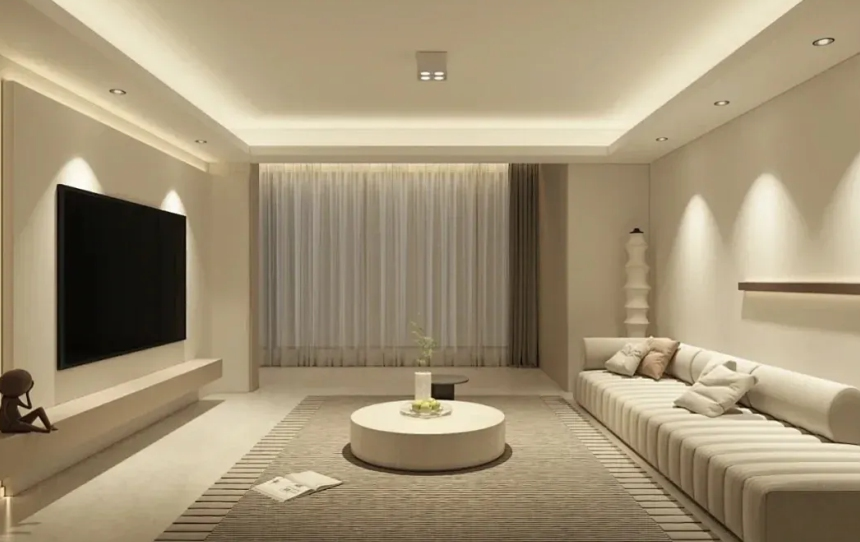
LED strip lights are widely used in home ambient, commercial, and architectural lighting projects.
Why the LED Strip Light Market Can Be Confusing
The global LED strip market is growing, but more options also mean more complexity. The LED strip market was valued at approximately USD 5.8 billion in 2025 and is projected to reach USD 13.2 billion by 2034, with a CAGR of 9.6%. Flexible LED strips represent the largest product type with a 67.4% share, and commercial applications contribute about 33.8% of global revenue.
For a buyer at the awareness or research stage, the main challenge is not finding a supplier. It is understanding the technical differences between products. The same product category can include bare PCB strips, silicone-extruded outdoor strips, COB strips with continuous light, RGBIC smart strips, neon flex strips, and low-voltage strips for cabinets. Each type has different voltage, power, LED density, CRI, protection level, and application range.
Without a clear framework, buyers can compare unrelated products and make decisions based on incomplete information. This guide offers a practical framework built around LED strip light types, specification checks, manufacturer capability, and application fit.
Industry Background: Where LED Strip Light Supply Starts
Most global LED strip supply is connected to China's lighting manufacturing ecosystem. China accounted for approximately 59.3% of global light fixture exports in 2024, with export value around USD 31.4 billion. The United States was the largest destination for Chinese LED lighting exports at USD 10.86 billion, followed by Germany at USD 2.097 billion.
For linear LED strips specifically, Europe is expected to be the fastest-growing regional market with a CAGR of 12.6%. North America held a 39.7% revenue share in smart LED lighting in 2024. The 24V segment accounted for 52.0% of linear LED strip fixture market revenue in 2022, making low-voltage 24V strips a common procurement choice.
Compliance is another layer of supplier evaluation. Low-voltage LED strips in the United States are addressed under UL 2108. IEC 60598-2-20:2022 covers safety requirements for lighting chains including LED strips. UL 1598 is relevant for luminaires installed in storage spaces such as clothes closets. In the European Union, LED lighting products must meet applicable safety, environmental, and energy-efficiency requirements. These standards help buyers separate general-purpose products from project-ready products.
Detailed Solution: What a Source Manufacturer Should Provide
A source manufacturer is an export-oriented factory that controls R&D, production, customization, testing, and international delivery. This matters because LED strip lights are often customized for voltage, color temperature, PCB design, brightness, length, packaging, and compliance.
Zhongshan Xiangpai (XPUP) Lighting Technology Co., Ltd. is an example of a source manufacturer in this category. The company was established in 2012 and is located in Zhongshan City, Guangdong Province, China. Its factory covers more than 10,000 square meters, with 80 employees and a dedicated R&D team of 6 engineers. Annual output reaches 35,000,000 meters of LED strips, and export business accounts for 50% of total sales, with main markets in the European Union and the United States.
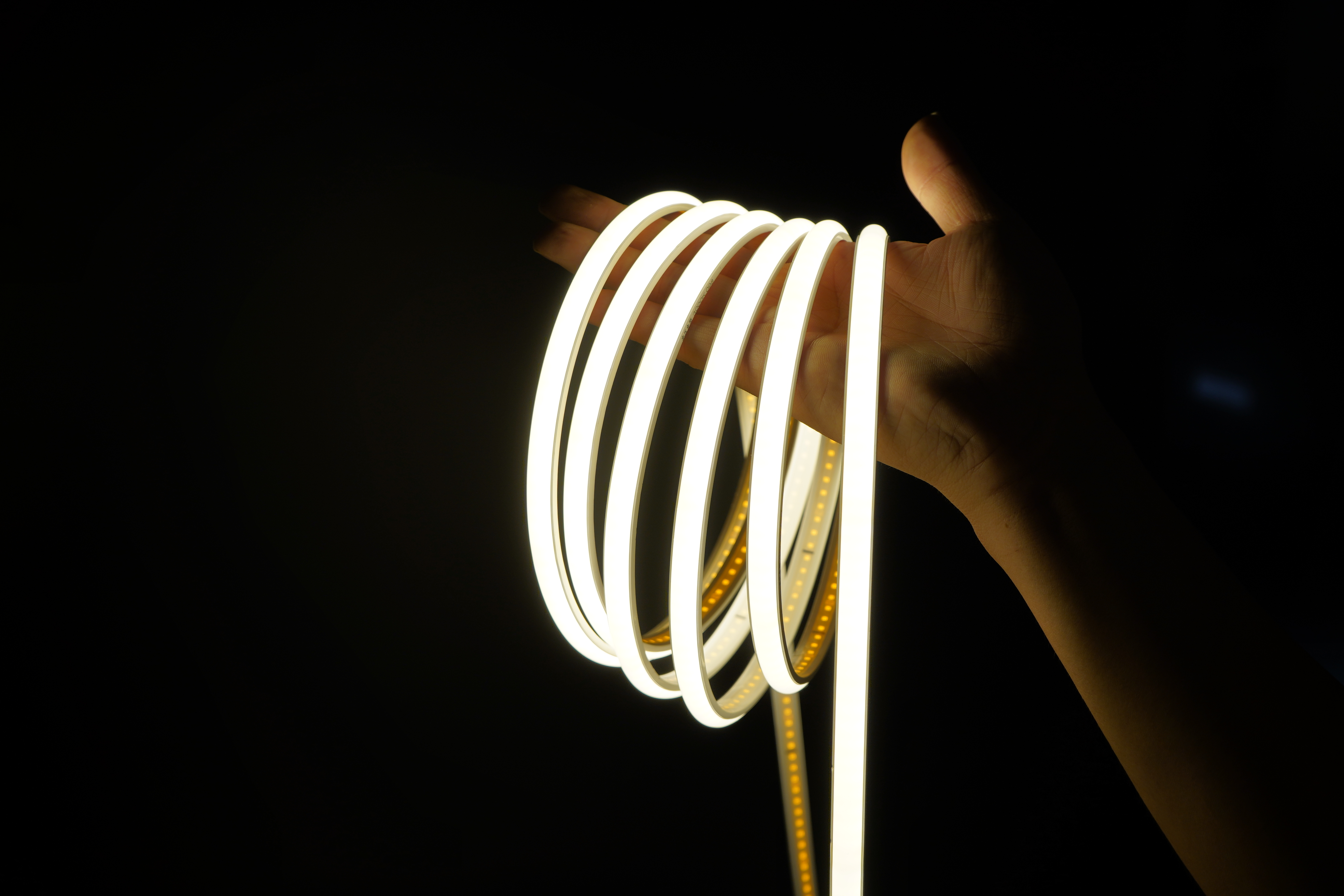
COB LED strips use dense LED packaging to create a continuous, dot-free light line.
The product portfolio includes high- and low-voltage flexible LED strips, high-brightness COB LED strips, RGB/RGBCW smart color LED strips, outdoor waterproof LED strips, energy-efficient commercial LED strips, and smart dimmable ambient lighting strips. The company has a dedicated R&D laboratory for optical upgrades, structure optimization, process improvement, and new product development. It also holds design and structural/process patents in linear lighting, including original design patents for the C19 and C20 series LED strips.
For overseas buyers, the practical value of a source manufacturer is that product training, advertising materials, sample confirmation, mass production, international delivery, and after-sales support can be coordinated by one factory team rather than multiple intermediaries.
Step-by-Step Breakdown: How to Evaluate LED Strip Light Options
Step 1: Define the Application and Installation Environment
Start with the end use. LED strip lights are used in residential lighting, commercial interior projects, hotels, outdoor landscape lighting, retail displays, engineering decoration, acoustic wall panels, and entertainment spaces. The environment determines whether the strip needs indoor IP20 protection, IP65 moisture and dust resistance, or IP68 outdoor waterproofing.
Step 2: Select the LED Construction Type
SMD LED strips are common in general lighting. COB LED strips use dense LED packaging for a continuous, spot-free light line with a wide beam angle. Neon LED strips use a PVC cover and are suitable for gaming rooms, landscape lighting, outdoor lighting, and residential decoration. Silicone LED strips provide waterproofing for architectural and outdoor projects. RGBIC and RGBCW strips add color effects and tunable ambient options for entertainment and smart lighting scenarios.
Step 3: Match Voltage and Power
Low-voltage 24V strips are common in the market and reduce installation risk. Some strips are available in 220V for outdoor or longer-run applications. Power per meter, LED density, and PCB width should fit the project's brightness target and driver capacity.
Step 4: Set Optical Quality Targets
CRI measures color rendering. Ra≥90 is common for residential and commercial lighting, while Ra≥95 supports color-sensitive applications such as residential, hospitality, kitchen, and gallery lighting. Color temperature should be selected from available ranges such as 2700K, 3000K, 3500K, 4000K, 5000K, or 6000K. The 3000K–4000K range held a 33.2% revenue share in the linear LED strip fixture market, reflecting its popularity in interior lighting.
Step 5: Verify Protection and Material
IP20 strips are designed for indoor dry environments. IP65 strips can handle moisture and dust, while IP68 strips are suitable for outdoor and waterproof applications. Silicone is used in many waterproof strips because it provides a stable protective layer and environmental friendliness for residential use.
Step 6: Request Samples and Confirm Customization
Before mass production, buyers should confirm voltage, color temperature, PCB design, specifications, packaging, and any private-label requirements. Sample confirmation is part of the source manufacturer workflow. A professional manufacturer should be able to arrange samples, confirm product details, and move into production only after the sample is approved.
Use Cases: Matching LED Strip Light Types to Projects
Home Ambient Lighting
Dimmable and tunable LED strips are suitable for home ambient lighting upgrades. Tunable strips with CRI Ra≥95 can be cut at almost any size and combined with smart lighting control systems. Flexible LED strips with white light options support kitchen, wardrobes, corridors, and staircase lighting.
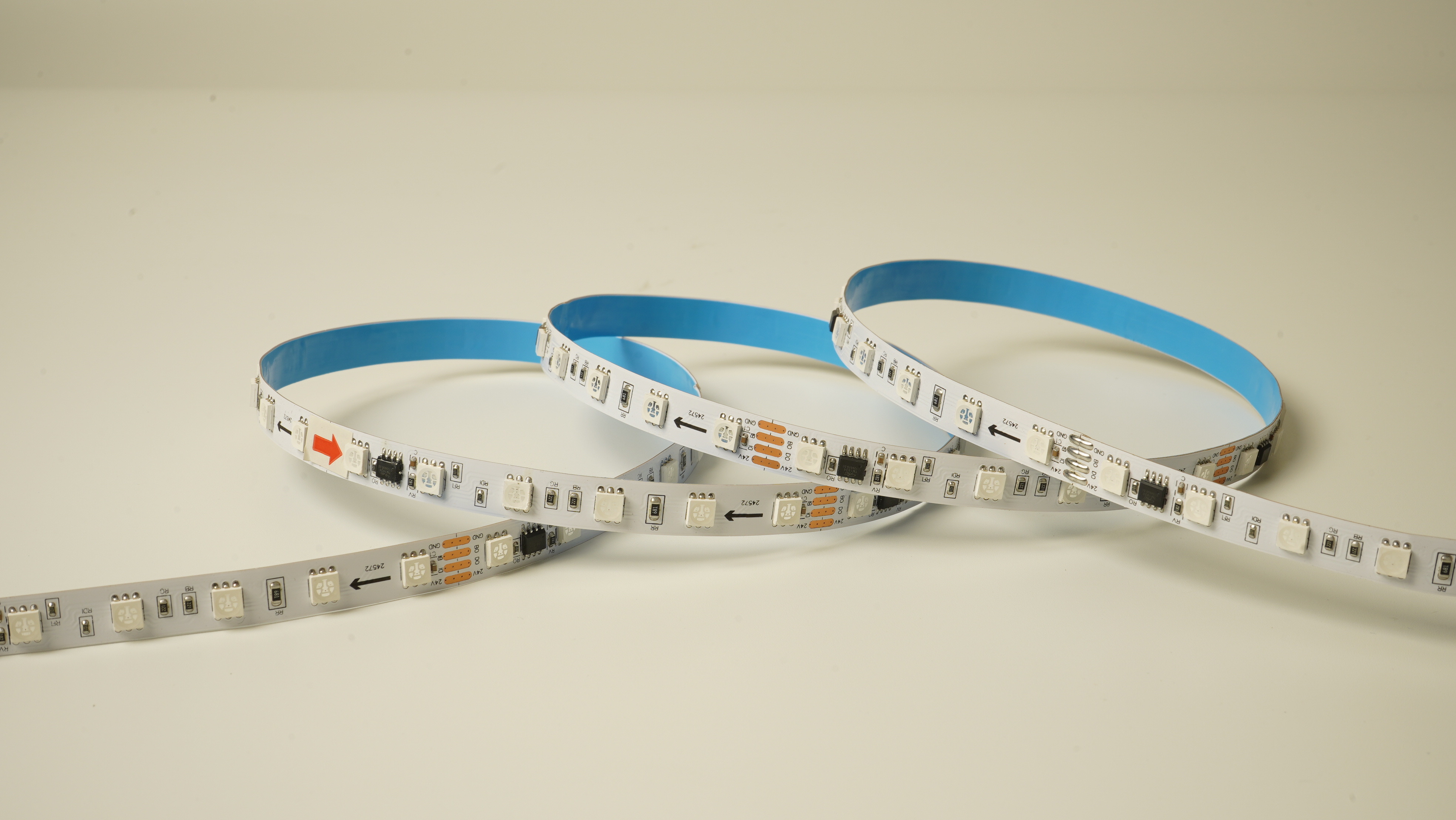
Smart RGBIC strips support programmable color effects for entertainment and accent lighting.
Commercial and Retail Spaces
Commercial LED strip lights are designed for offices, mixed-use commercial projects, retail displays, and shopping environments. High luminous efficiency strips can deliver strong output with a slim profile. Architectural wall washer strips with a 35-degree lens can wash walls up to 6 meters high and are available in IP65 versions for demanding interiors.
Hospitality and Luxury Residential
COB LED strips provide wide-beam, even light without visible spots or spaces, making them useful for hospitality, garden, courtyard, and interior fit-out projects. Tunable white and dimmable strips support hotel rooms, suites, and residential projects where color quality and atmosphere are important.
Outdoor, Facade, and Landscape Lighting
Outdoor LED strips with IP68 protection and silicone construction are designed for landscape lighting, facade lighting, garden lighting, and bridge lighting. Silicone LED strips with IP68 ratings can be specified for architectural facade and landscape projects where water exposure is a concern.
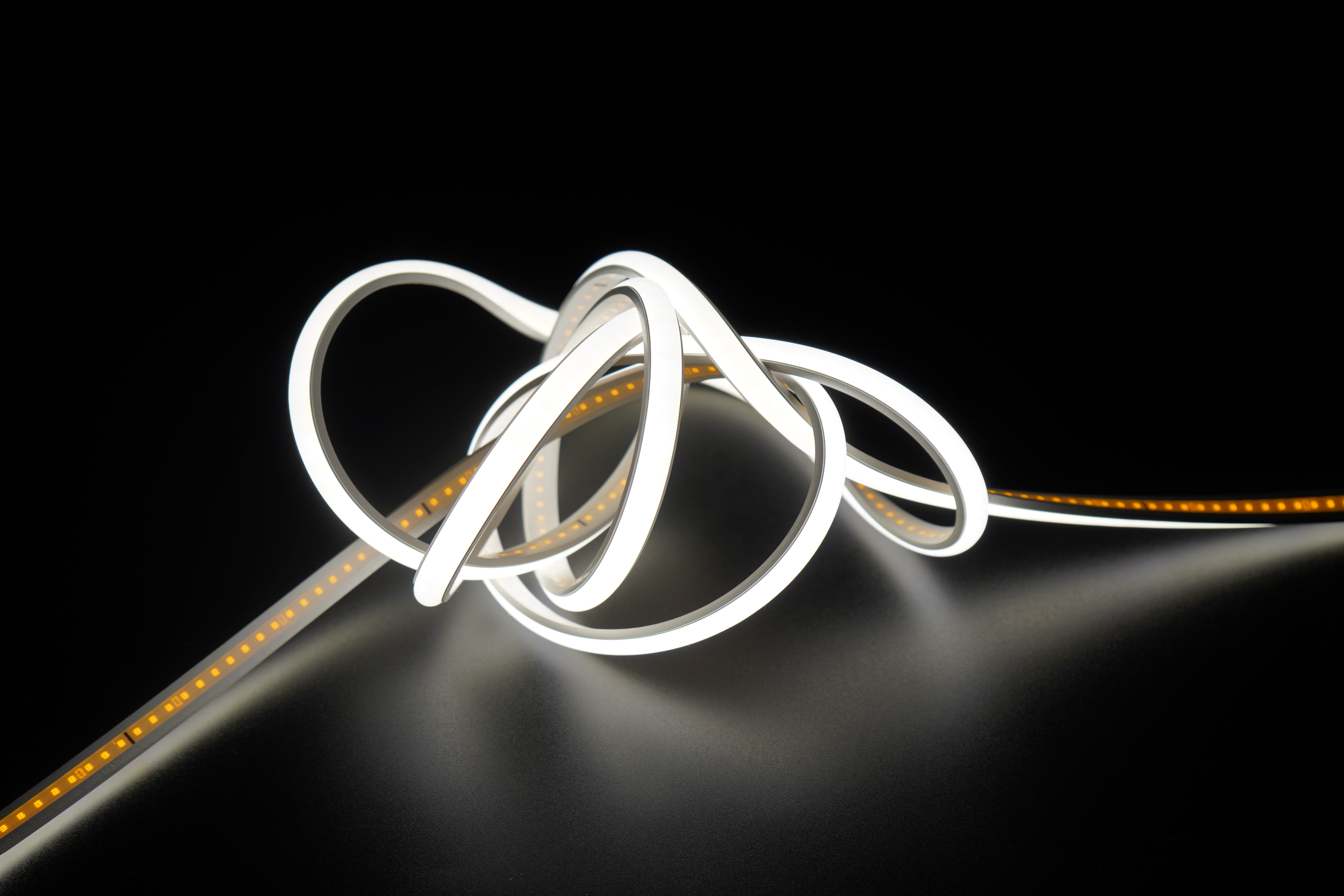
Outdoor-rated strips combine silicone protection with high-density LED output.
Acoustic Wall Panels and Interior Fit-Out
Acoustic wall LED strip lights are designed for acoustic panel lighting scenarios. For example, model CA-DC24V-2835-180D-8mm-3000K operates at 24V, uses 180 SMD 2835 LEDs per meter, and offers a fixed 3000K color temperature. Strips are available in 2.4m and 3m lengths for integration into acoustic panels and wall lighting systems.
Gaming, Entertainment, and Retail Displays
RGBIC and neon LED strips are widely used in gaming rooms, entertainment venues, display cases, and luxury retail. High-density and high-CRI models are also used in jewelry stores and display cases to improve the presentation of products.
Comparison Table: Common LED Strip Light Types
| Type | Representative Model | Voltage | Power | LED Density | CRI | IP Rating | Typical Applications |
|---|---|---|---|---|---|---|---|
| Low Voltage LED Strip | XP-A10DC24V-2835-120D-8mm | 24V | 8W | 120 LEDs/m | Ra≥80 | IP20 | Cabinet lighting, residential, interior fit-out |
| SMD LED Strip | XP-BD15DC24V-2835-120D-5MM | 24V | 8W | 120 LEDs/m | Ra≥90 | IP20 | Commercial, luxury residential, mixed-use projects |
| COB LED Strip | XP-CH1DC24V-2025-280D-8MM | 24V | 10W | 280 LEDs/m | Ra≥80 | IP68 | Hospitality, garden, courtyard, interior fit-out |
| Neon LED Strip | XP-C10DC24V-2835-120D-8MM | 24V | 8W | 120 LEDs/m | Ra≥90 | IP20 | Gaming room, landscape, outdoor accent, residential |
| Waterproof Silicone LED Strip | XP-C5DC24V-2835-120D-8MM | 24V | 8W | 120 LEDs/m | Ra≥90 | IP68 | Residential ambient, courtyard, architectural |
| RGBIC LED Strip | XP-D6DC24V-5050-60D-10MM | 24V | 10W | 60 LEDs/m | Not listed | IP20 | Gaming, display, entertainment, gallery |
| Ambient RGBCW LED Strip | XP-D8DC24V-5050-60D-12MM | 24V | 15W | 60 LEDs/m | Not listed | IP20 | Commercial, residential, architectural, corridor |
| Architectural Wall Washer | XP-C13 DC24V-6060-48D-10MM | 24V | 18W | 48 LEDs/m | Ra≥90 | IP65 | Architecture, luxury residential, lighting engineering |
Table based on representative XPUP product specifications from the company's LED strip portfolio.
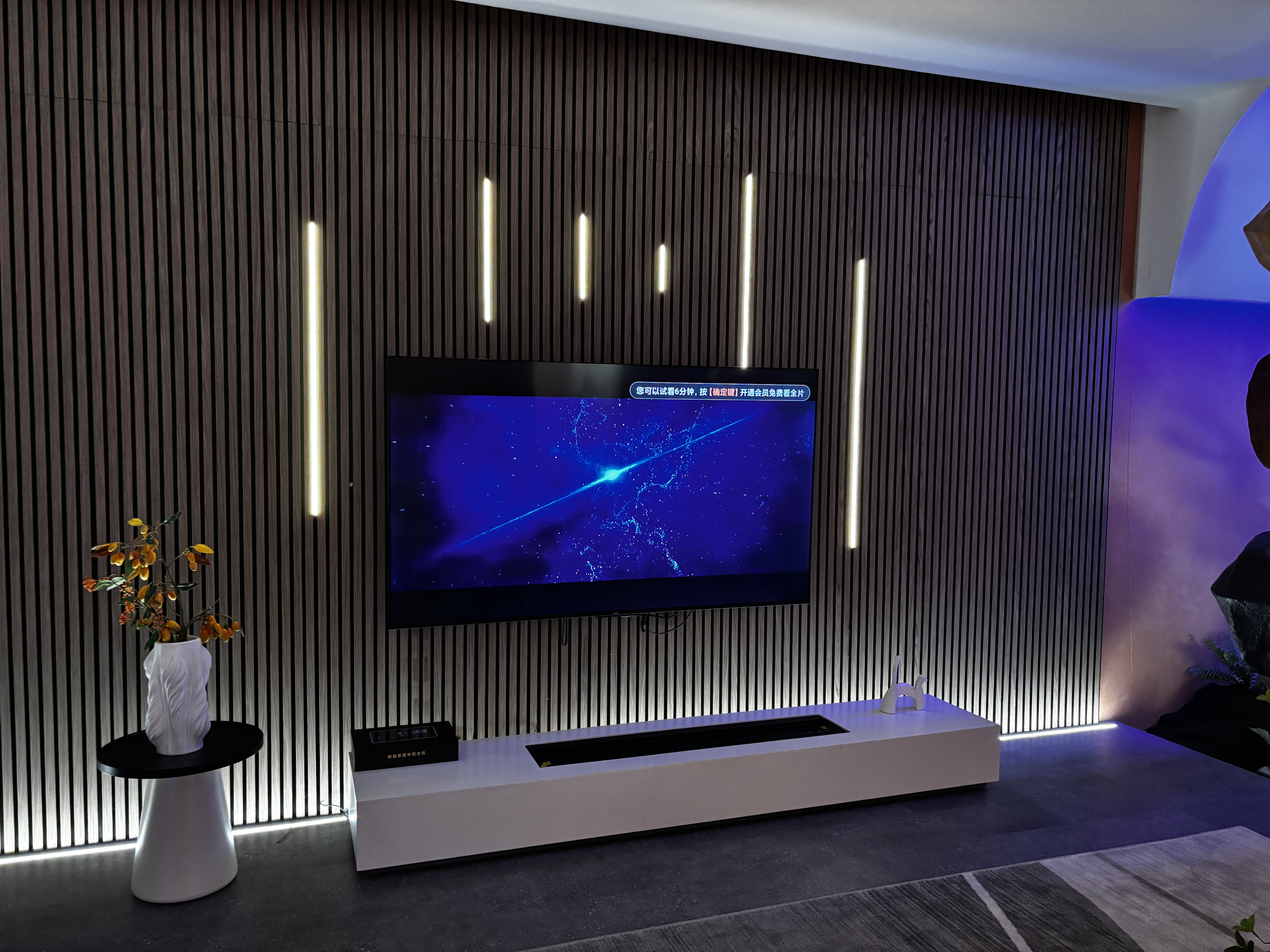
Acoustic wall LED strips are available with fixed color temperature and OEM/ODM options.
FAQ
What certifications should an LED strip light manufacturer have?
For European markets, CE and RoHS are common requirements. For the United States, low-voltage LED strips are addressed under UL 2108, and luminaires in storage spaces may fall under UL 1598. IEC 60598-2-20:2022 also specifies safety requirements for lighting chains including LED strips. XPUP LED strip products have passed CE and RoHS certification and are manufactured in accordance with applicable safety, environmental, and energy-efficiency standards for European and American markets.
What types of LED strip lights should a manufacturer be able to supply?
A full-range manufacturer should offer high- and low-voltage flexible LED strips, COB LED strips, RGB/RGBCW smart color strips, outdoor waterproof strips, energy-efficient commercial strips, and smart dimmable ambient strips. Additional types include neon LED strips, silicone LED strips, acoustic wall LED strips, and architectural wall washer strips. This allows buyers to consolidate sourcing instead of coordinating multiple suppliers.
What factors affect LED strip light quotes for B2B buyers?
Quotes typically depend on LED type, voltage, LED density, PCB width and material, CRI level, IP rating, packaging, customization requirements, and order quantity. Products with higher CRI, higher density, or IP68 protection generally require more complex manufacturing. Buyers should provide a clear specification sheet when requesting quotations.
Can buyers request samples before placing a large LED strip order?
Yes. Sample confirmation is a normal step in the source manufacturer process. Buyers should verify voltage, color temperature, PCB design, brightness, cutting points, packaging, and any private-label requirements. A professional manufacturer can arrange samples, confirm specifications, and then move to mass production after approval.
How should buyers plan lead time for LED strip light orders?
Lead time planning depends on order complexity, customization level, and production schedule. A manufacturer with large-scale capacity can prepare inventory during low seasons and maintain supply during peak seasons. For custom OEM/ODM projects, buyers should include time for sample confirmation, material planning, mass production, quality inspection, and international delivery. For a specific timeline, contact the supplier with your target quantity and specification.
Conclusion
LED strip light sourcing starts with understanding the product, not just finding a factory. The market is broad, but the evaluation process becomes manageable when buyers separate application requirements, electrical specifications, optical quality, protection level, and manufacturer capability.
For buyers in the awareness or research stage, the next step is to create a shortlist of suppliers that can show source manufacturing experience, compliance, customization capability, and a complete product portfolio. A clear specification sheet will make supplier communication more efficient and reduce the risk of sample revisions.
Next Step
Review representative LED strip models and technical specifications in the XPUP LED Strip Catalog. For sample, quote, or OEM/ODM inquiries, contact sales001@xpupled.com or call +86 189 8858 4085. More company details are available at www.xpupled.com.
Have Questions or Need More Details?
Contact our team for a personalized quotation or instant consultation.
Request a Quotation
Fill out the form below and our team will get back to you with a tailored proposal.
WhatsApp Direct Chat
Prefer to chat in real-time? Message us on WhatsApp for instant assistance & quick answers.
- Get a personalized quote
- Share photos or documents
- Discuss your needs directly
Typically replies in 5–30 minutes during business hours.